Spaghetti ala Puttanesca

Revised by author on 12/30/2013
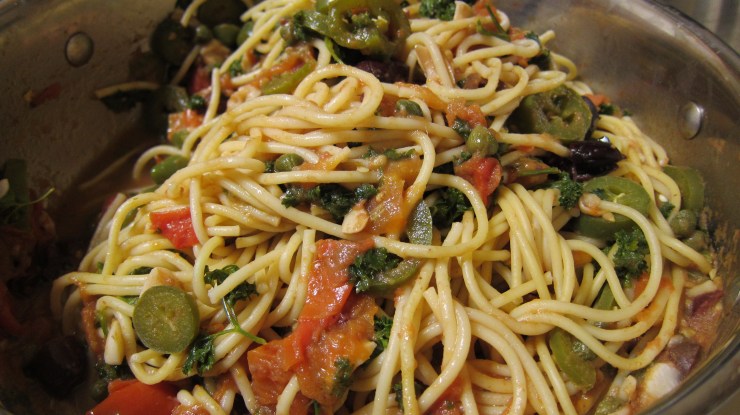
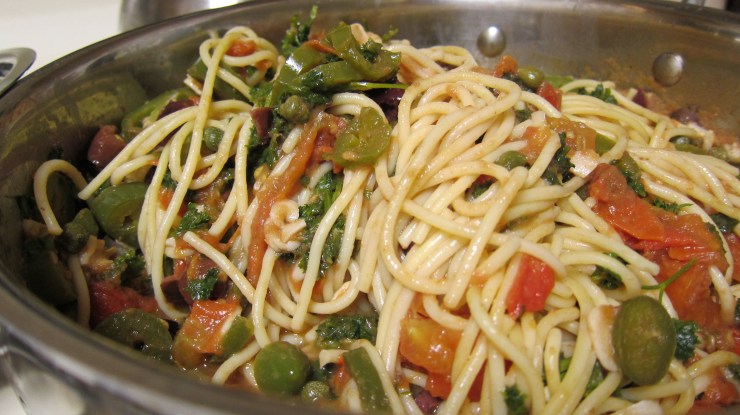
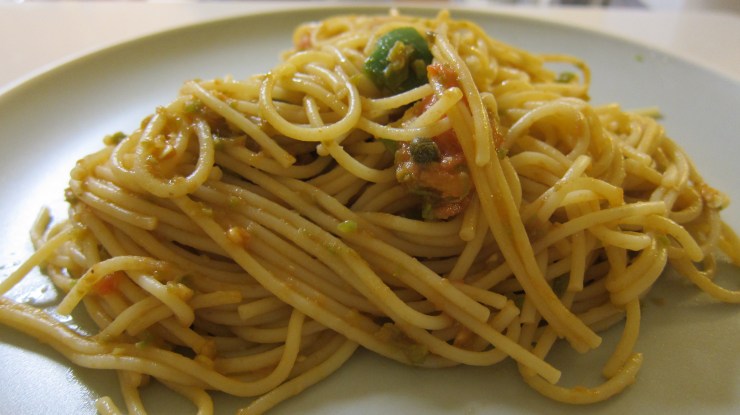
Spaghetti ala Puttanesca
Spicy and garlicky, infused with anchovies! My kind of spaghetti…

Spaghetti ala Puttanesca

Spaghetti ala Puttanesca

Recently I stumbled upon a description of this dish in a book, called Belong to Me by Marisa de los Santos, that I checked out from the library on a whim. (Yes, though I have an Amazon Prime and a tablet, I still check out books from public library. I also still prefer books than e-books.) Anyway, one of the characters in this novel ( a book that has nothing to do with cooking by the way) described and raved about the dish in such a beautiful way that it made me hungry. Immediately! And that name, Spaghetti ala Puttanesca, the Whore’s Style Spaghetti? Wild! How could I resist the urge to try a dish with such a scandalous title?

In no time, I found tons of recipes for the dish online. I made mine using Nigella Lawson’s. This recipe had me at jalapeño. Here’s my adapted version. I liked it even more with the following revisions!

  • I used 12 10 instead of eight marinated anchovies (usually come in a tin or a jar)
  • I used five fresh jalapeno peppers (chopped) instead of pickled and chili flakes
  • I chopped five fresh tomatoes (instead of mixing them with canned tomato sauce) two heirloom and mix them with a small can (8 oz) of tomato sauce (not dice tomatoes or tomato paste)
  • Two tablespoon of olive oil
  • Two tablespoon of capers (drained and rinsed)
  • Three tablespoon of (roughly) chopped black olives Forgot to buy black olives so I went without
  • Five garlic (chopped) Four
  • A handful of parsley (chopped)

(Serves 3-4 people)

Steps:

  • Boil the pasta. Add a little bit of salt and olive oil into the water. Follow the instruction on the packaging.
  • Mix anchovies, jalapeño peppers, and garlic in a food processor then cook it with olive oil on a heated medium pot for two or three minutes.
  • Add chopped tomatoes, capers, and tomato sauce into the pot. Stir to mix everything together and let it cook for 10-15 minutes.
  • Heat up a large pan, add olive oil, garlic, chopped tomatoes, and anchovies. Mix them well. Add jalapeno peppers, black olives, and capers. Cover the pan with a lid and let it cook for 10–15 minutes
  • Drain the pasta, mix with the sauce, and add parsley
  • Serve and eat up!

Another easy and delicious recipe to keep.

Thanks for reading. Hope your week is going well!

Sources of inspiration for this blog entry:

Marisa de los Santos’ Belong to Me (pg. 44)

Nigella Lawson’s recipe: Slut’s Spaghetti

The Mystical and Historic East Java

(Touring the Motherland Series)

As part of the Majapahit Empire in the 13th – 16th century, Surabaya and its surrounding area in East Java province has much history to tell. About 35 miles south of Surabaya, nearby Trawas, Mount Penanggungan stands keeping hundreds of historical monuments left by the kingdom. East Javanese in Majapahit era embraced both Hindu-Buddha spirituality and considered the mountain to be sacred. Hence the places of worship built all over Penanggungan. So when my guy and I heard about an archaeological trail being developed on the mountain by University of Surabaya, we immediately signed up for a short day-hike.

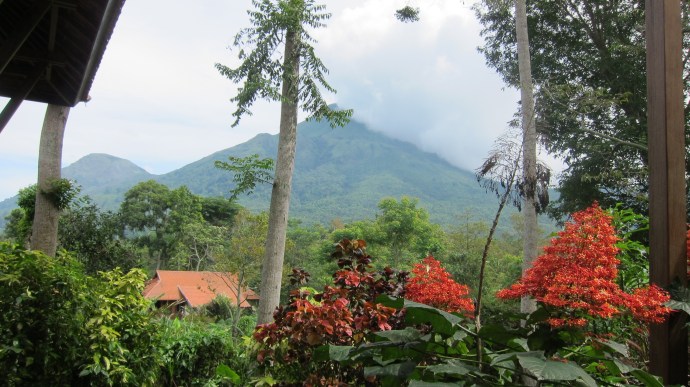
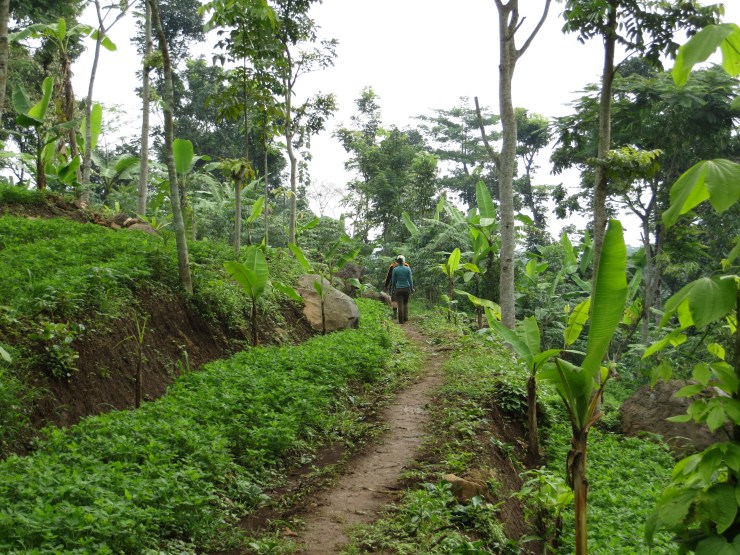
The distinct profile of Penanggungan, with its cone shape, rounded summit as the center, and the small hills that looked like they sat symmetrically circling the mountain’s shoulders, made a majestic backdrop. By mid morning, we joined a small group to hike through the woods up to the mountain. The rocky and grassy trail turned muddy and slippery after the rain. It made ascending and descending on the short distance route we chose to be quite challenging. I think all five of us must have slipped at least once (and many times for me!). 

Mount Penanggungan's summit
Mount Penanggungan’s summit

Mount Penanggungan

Going up the mountain

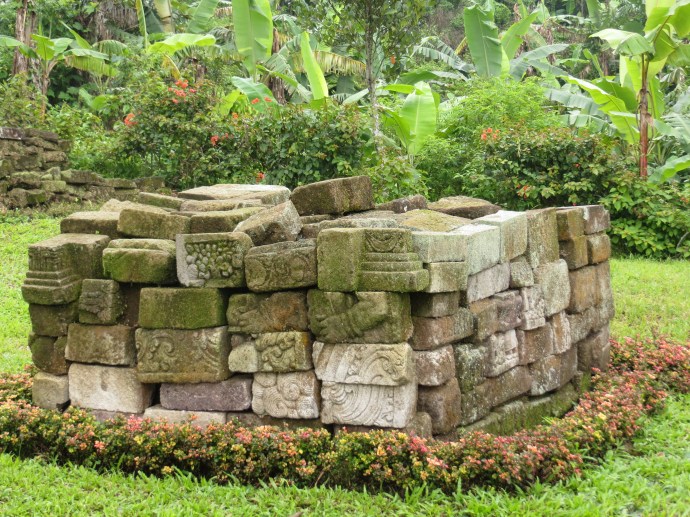
The two ancient ruins we saw, Selo Kelir and Telong Blandong, looked like gigantic terraces that made up one big temple for spiritual ceremonies. The consultant explained that most artifacts at the ancient sites all over the mountain have been stolen. Archaeological theft is such an unfortunate reality and a real challenge in history preservation effort.

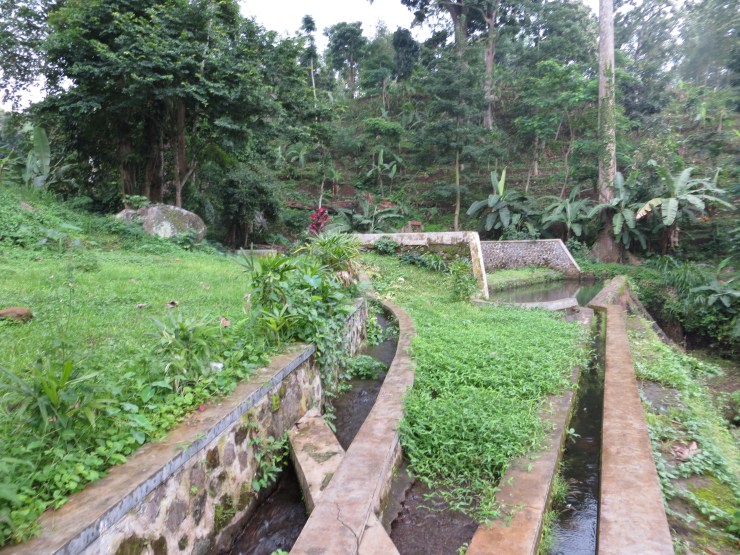
Overlooking a stretch of lush green valley, the view from the top of Telong Blandong was nothing short of spectacular. The fog set in as we started to descend slowly. We passed a spring on the way back. The smell of incense burning along the weir added a mystical feel to the experience.

I’ve always been fascinated by Penanggungan ever since I was little. Little did I know that behind its beauty lies mystical and rich cultural history of East Java. Penanggungan’s charm didn’t disappear with the fall of the Majapahit empire. It continues to allure people to admire its magnificence closely on its wild slopes or from afar. Either way is a treat for the soul.

Carved stones that probably used to make up part of the temple.

Carved stonesPart of the monument Selo Kelir

Some part of the trail has been developed
Locals look for grass in the mountain to sell to cattle owners.
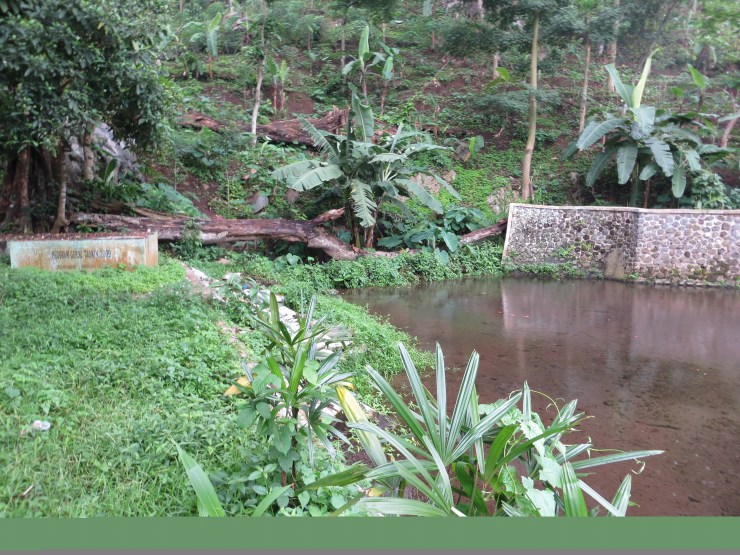
A spring
A spring
Water from the spring passing through a weir
Offerings and incense burning along the weir

Other historic places we visited while in Trawas:

Jolotundo Temple: a water spring reservoir dated back to 977 CE. It was said to be King Airlangga's place to meditate. It is also said  that the water from the spring behind the temple to be very clean and has high minerals. Bathing pools are available on the two sides. One side for women and another side for men.
Jolotundo Temple: a water spring reservoir dated back to 977 CE. It was said to be King Airlangga’s place to meditate. It is also said that the water from the spring behind the temple to be very clean and has high minerals. Bathing pools are available on the two sides. One side for women and another side for men.
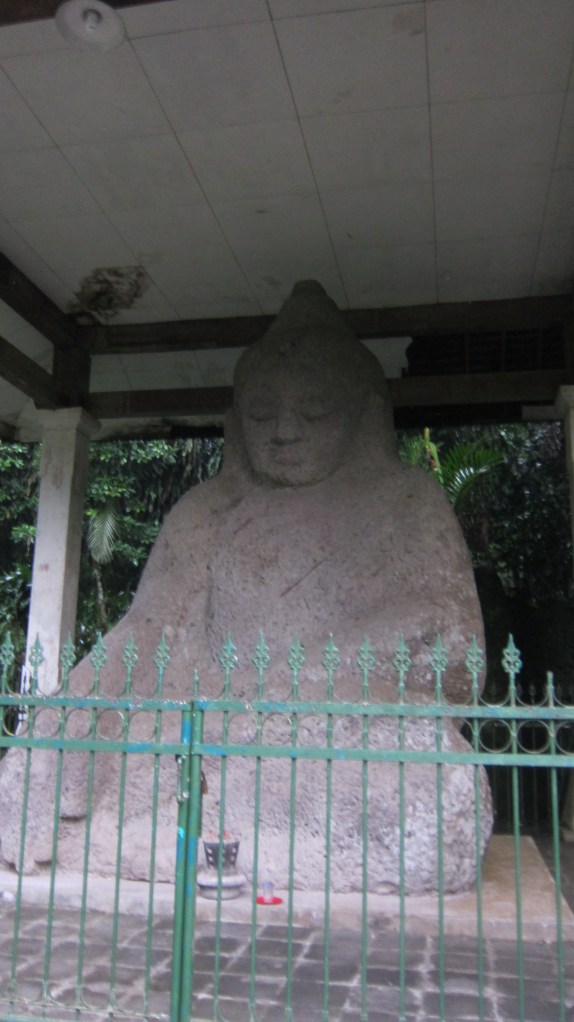
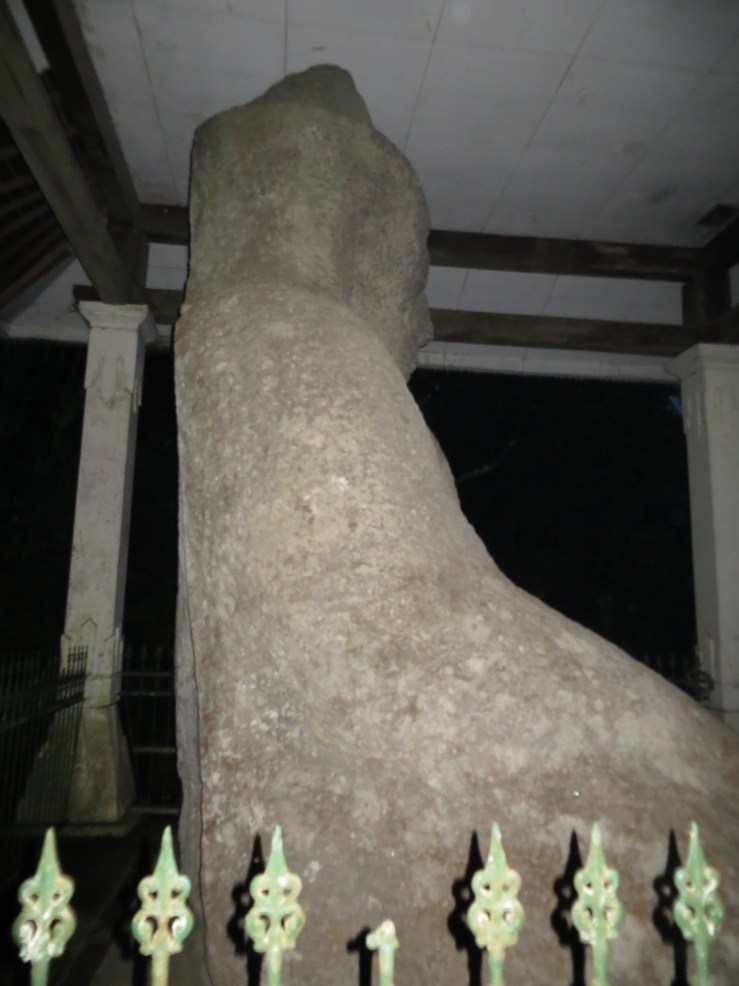
A giant Buddha statue carved in one stone. Dated back to the Majapahit era (13th-16th century).
Reco Lanang: A giant Buddha statue carved in one stone. Dated back to the Majapahit era (13th-16th century).

From the side

Thanks for reading! Hoped you enjoyed it.

More articles on the archeological trail and East Java’s history from various sources:

Exploring the Ancestor Site (Part 1)

Exploring the Ancestor Site (Part 2)

Memory of Majapahit Kingdom 

A special thanks to Pak Kus and Mas Ronald at UTC

Photos by The Traveling Chili Pepper and friends
Touring the Motherland Series: Surabaya

Like most big cities, Surabaya feels packed, busy, and sounds a bit loud. My visit last December changed my point of view about my hometown though. After experiencing the congested Jogjakarta on one of the busiest national holiday weekends—chock full of tourists, jam-packed, and overcrowded… you get the idea—my guy and I were incredibly thankful for and to be back in Surabaya. We let go a sigh of relief when the plane landed at Juanda. Surabaya had never felt so much bigger, roomier, better organized, cleaner, and greener. Isn’t travelling great? I gain a lot from it, including: perspective.

What else can I tell you about my hometown? Ah, yes, Surabaya is a city with good eats. This is the place to be for delicious East Javanese cuisine like sate klopo, sate Madura, soto ayam, and soto Madura. And of course, my must-haves: the thick, spicy, and fragrant petis-based (shrimp paste) dishes: rujak, lontong balap, tahu campur, kupang lontong, sate kerang, and oh so many other. Adjectives I’d use to describe East Javanese cuisine would be the same words I’d use to depict its people: bold and gutsy! The flavors “kick” the taste bud, as a friend puts it.

Founded in 1293, Surabaya, is an old and historic city with a youthful look and modern feel. In a certain section, the city displays its colonial-style houses left by the Dutch. The Arab quarter and Chinatown remain vibrant, reminding everyone of the attractive qualities of this port and trade city to foreign traders since way back when. Other parts of Surabaya are decorated with luxurious shopping malls with brands such as Jimmy Choo as one of its tenants. Competing shopping malls attract Surabayans the same way Chicago’s Lakefront Trail/park draws enthusiastic joggers, bicyclists, and sunbathers in summer months. Local coffee shops multiply rapidly all over you’d think that the whole city must be highly addicted to coffee. City pulse is strong and growth is apparent. Surabaya might be 720 years old but it looks like she’s far from slowing down. 


Next blog entry: the mystical and cultural charm of East Java

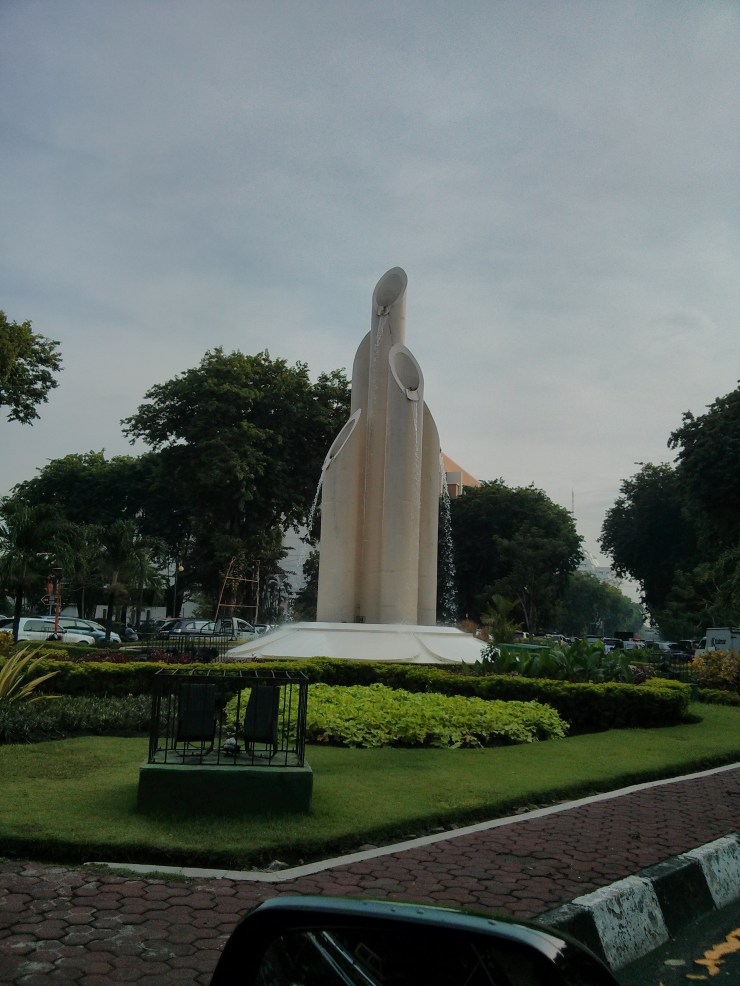
Bambu Runcing
Bambu Runcing Monument: was built in memory of the people of Surabaya who fought against the Dutch and British imperialism.
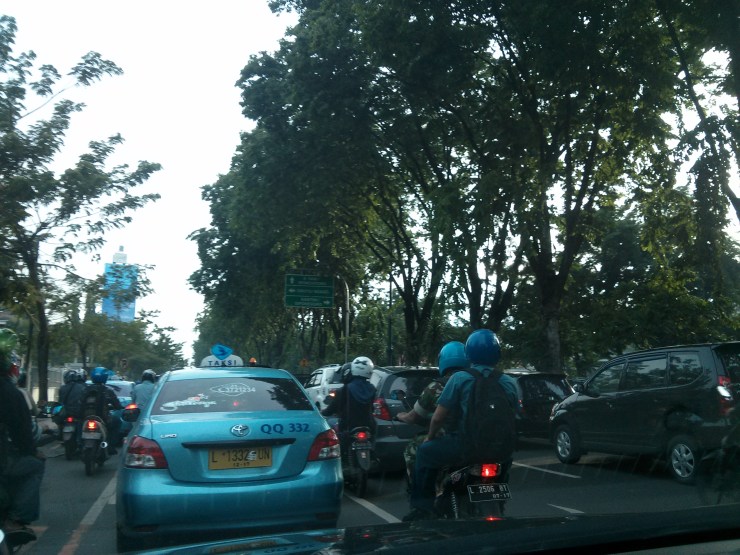
Always crowded
The consistent traffic jam
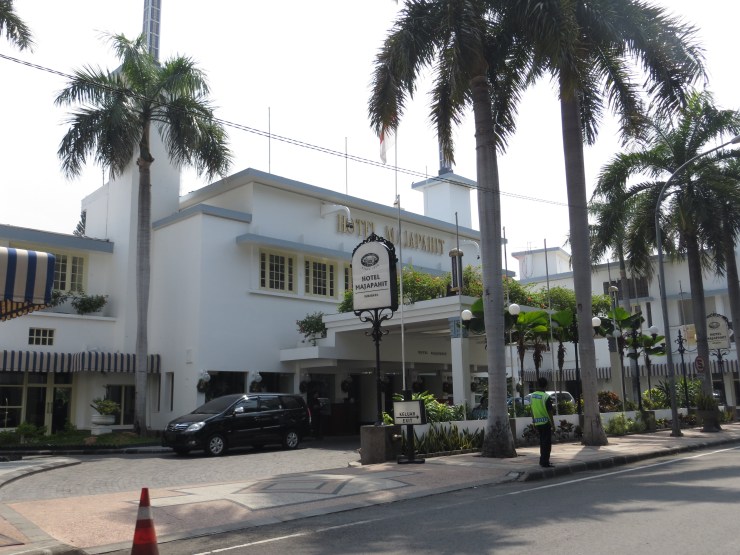
Hotel Majapahit
Hotel Majapahit (since 1911)

Related readings from various sources: 

Eating Out in Indonesia

Travel to Surabaya

Official Site of the City Government

Sparkling Surabaya

Memory of Majapahit

Surabaya’s Chinatown

Ampel: The Holy Heart of Surabaya

Photos properties of The Traveling Chili Pepper

Eating Out in Indonesia

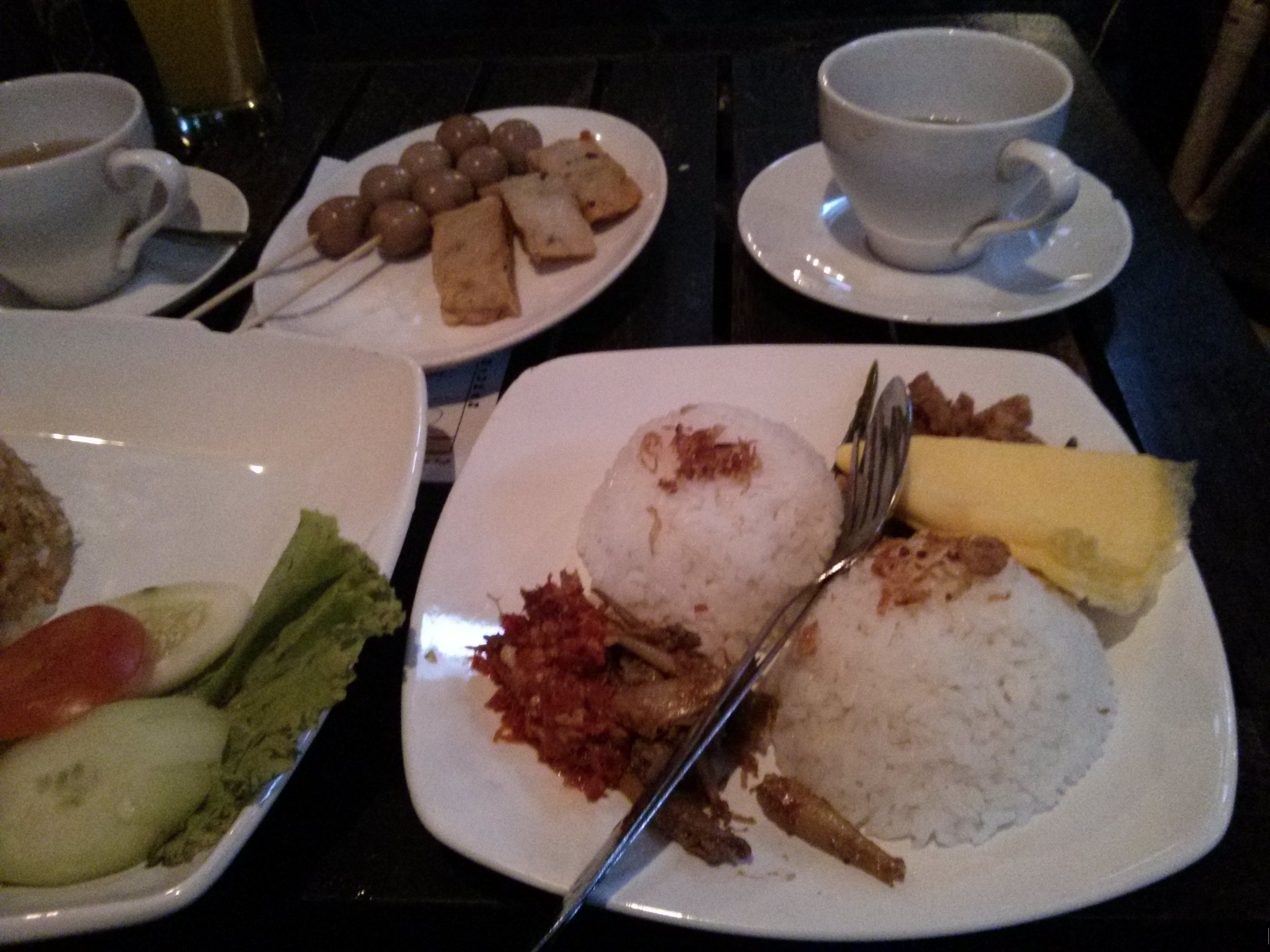
I had just returned from paradise. A tropical and food paradise. Hence the long pause in my food blogging activity. Jeff and I flew back to our homeland, Indonesia, this past December. I took a break from cooking for about three weeks and we ate out almost every single day. In those days we didn’t eat out, our parents and relatives sent food for us! Our families spoiled us with both home-cooked and street food. Ah…the beauty of returning home.

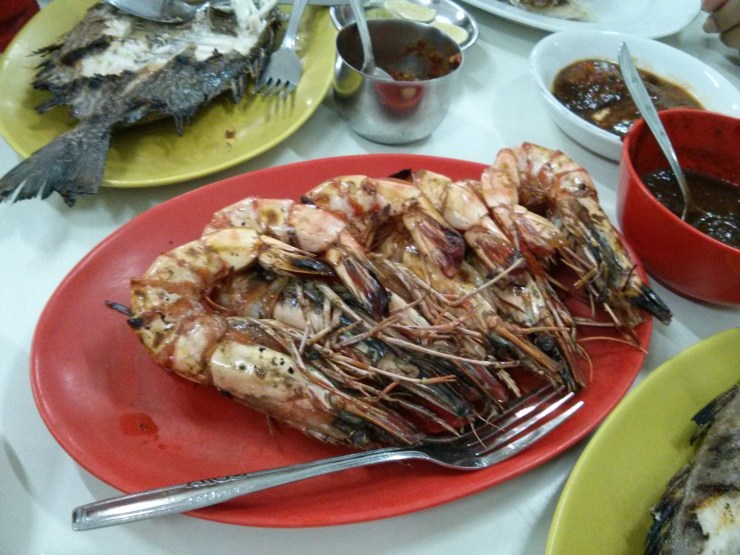
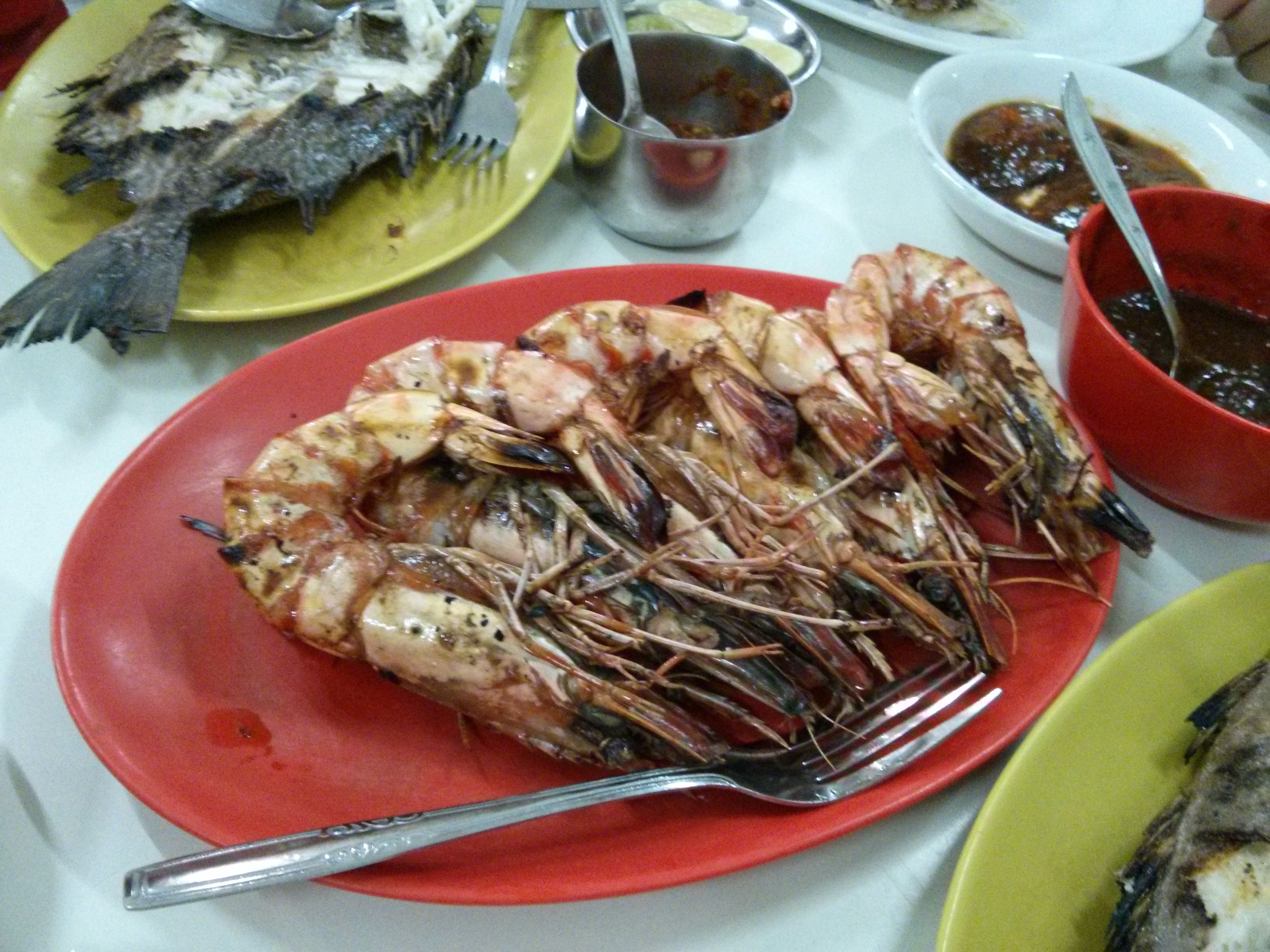
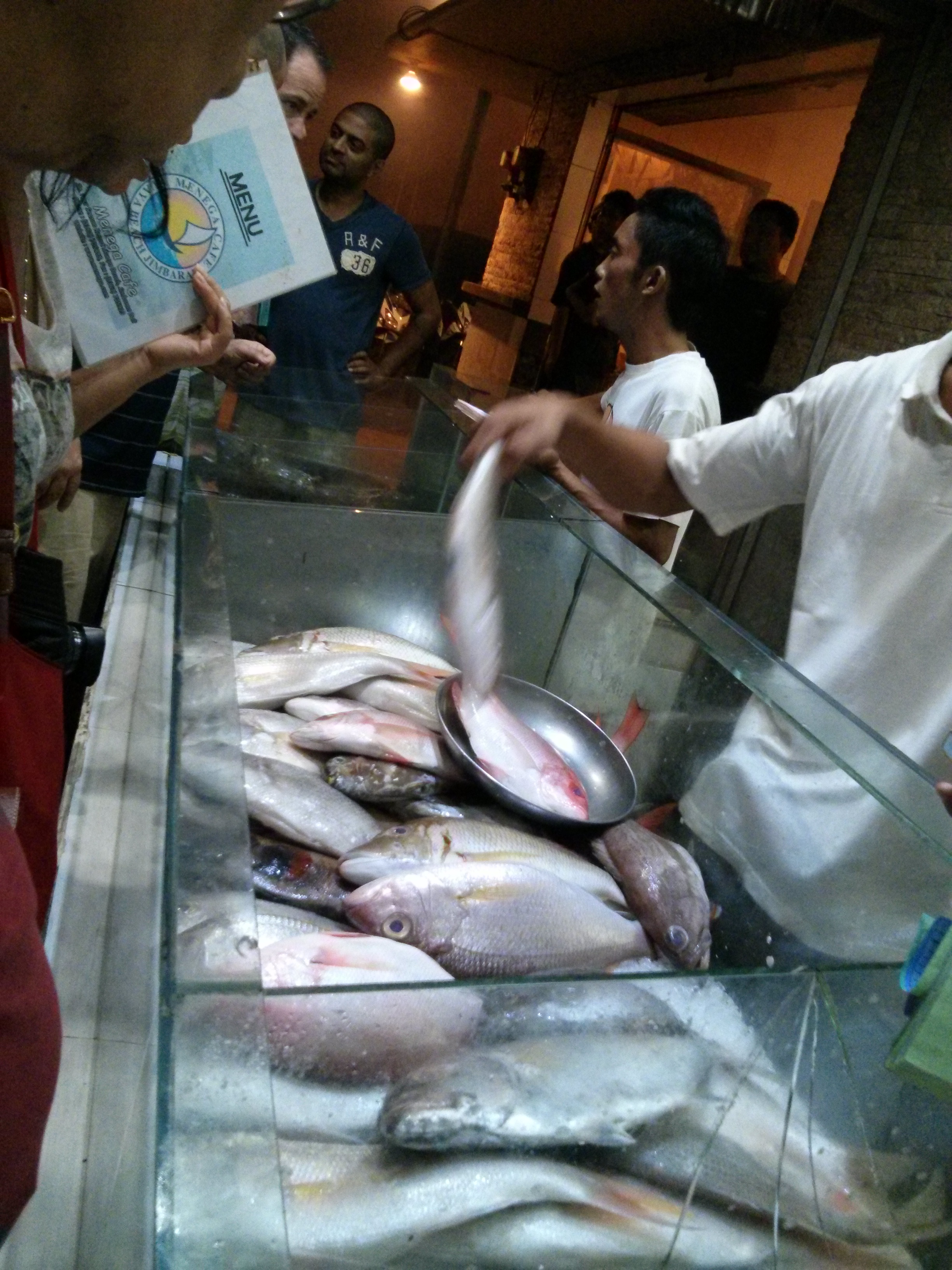
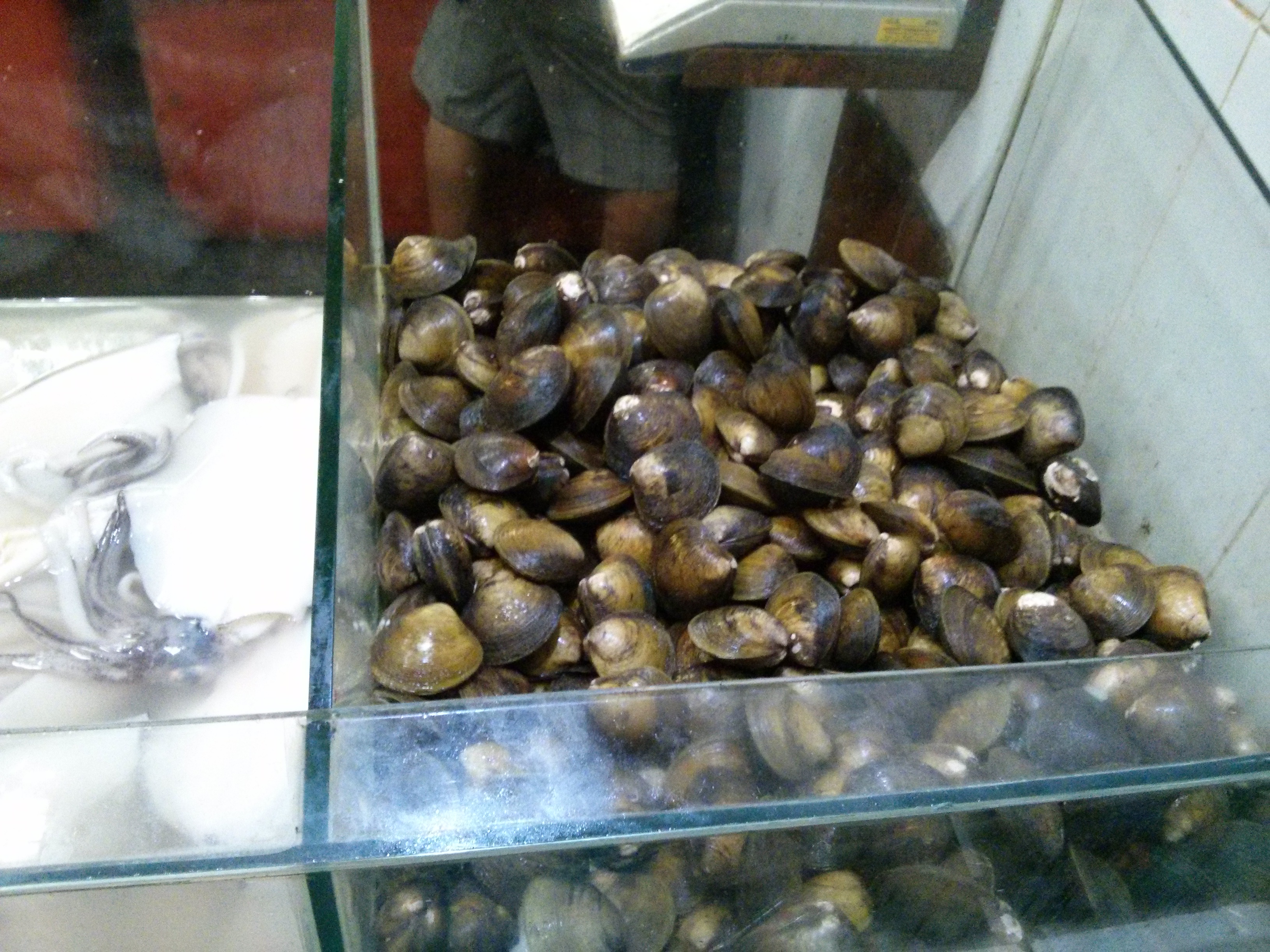
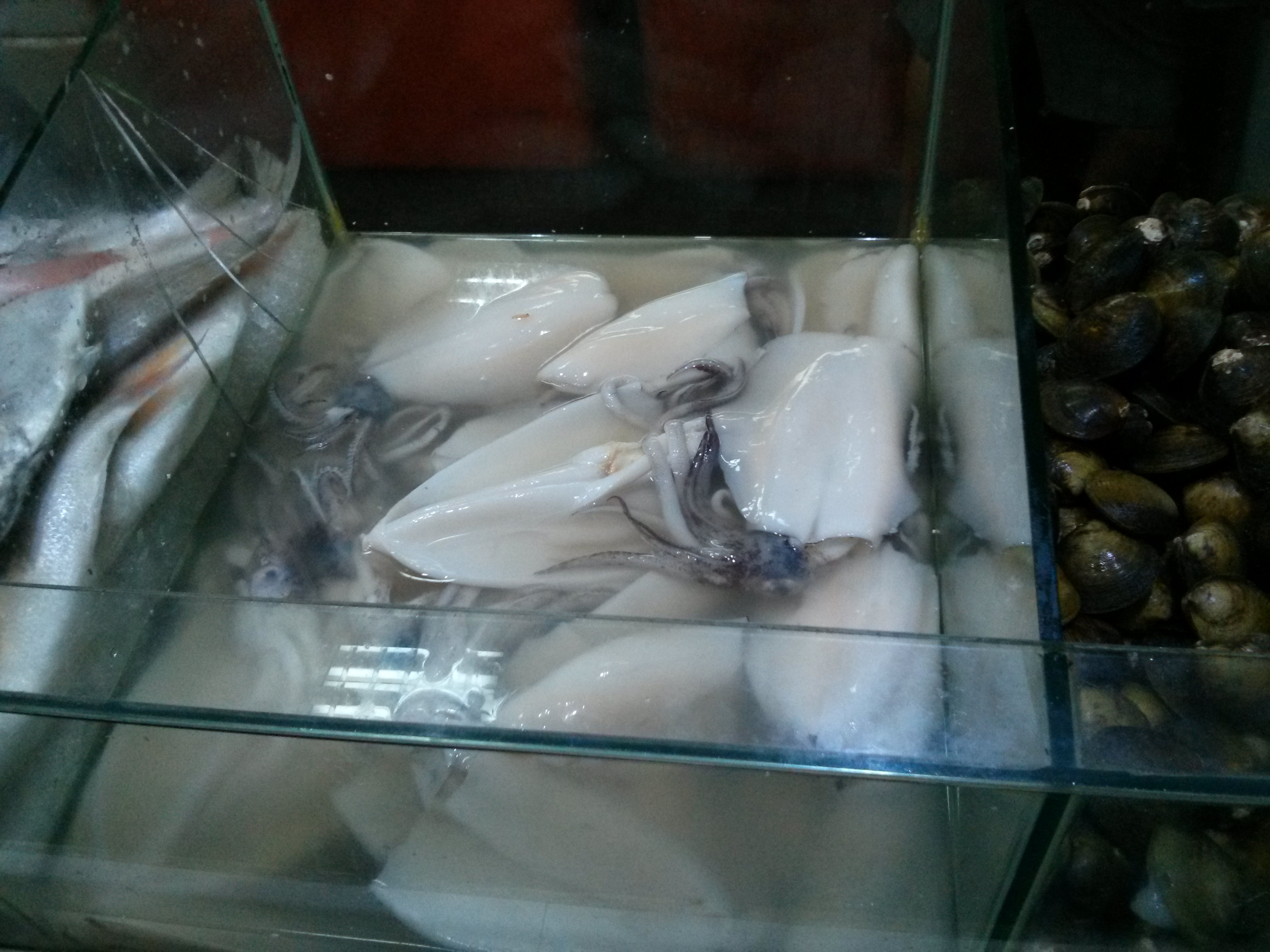
What else can I tell you here about our culinary travel while visiting our families? Ooo yeah, seafood! The plentiful, never ending seafood! Tons of different kinds. The place is heaven for serious seafood enthusiasts such as yours truly.

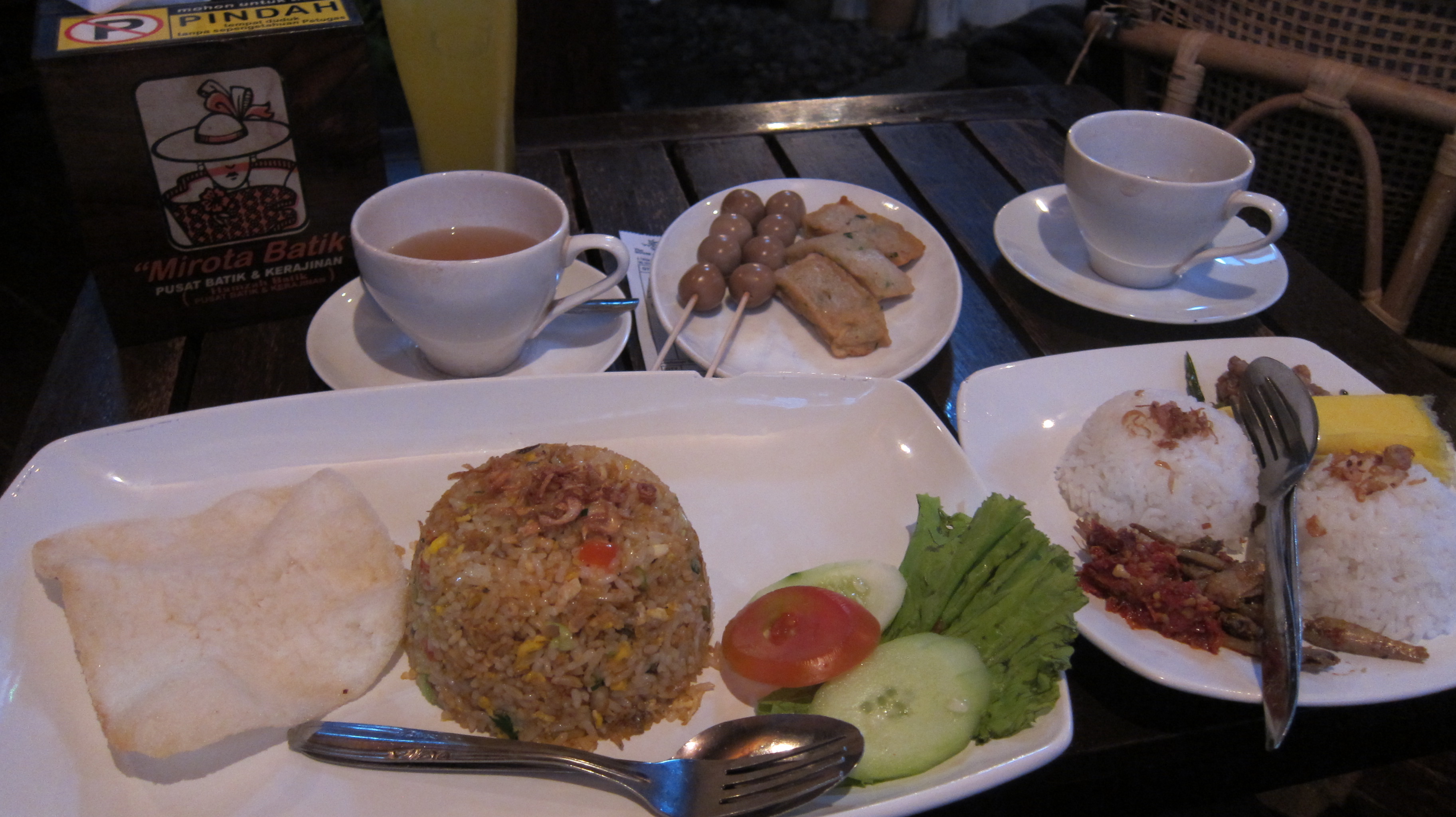
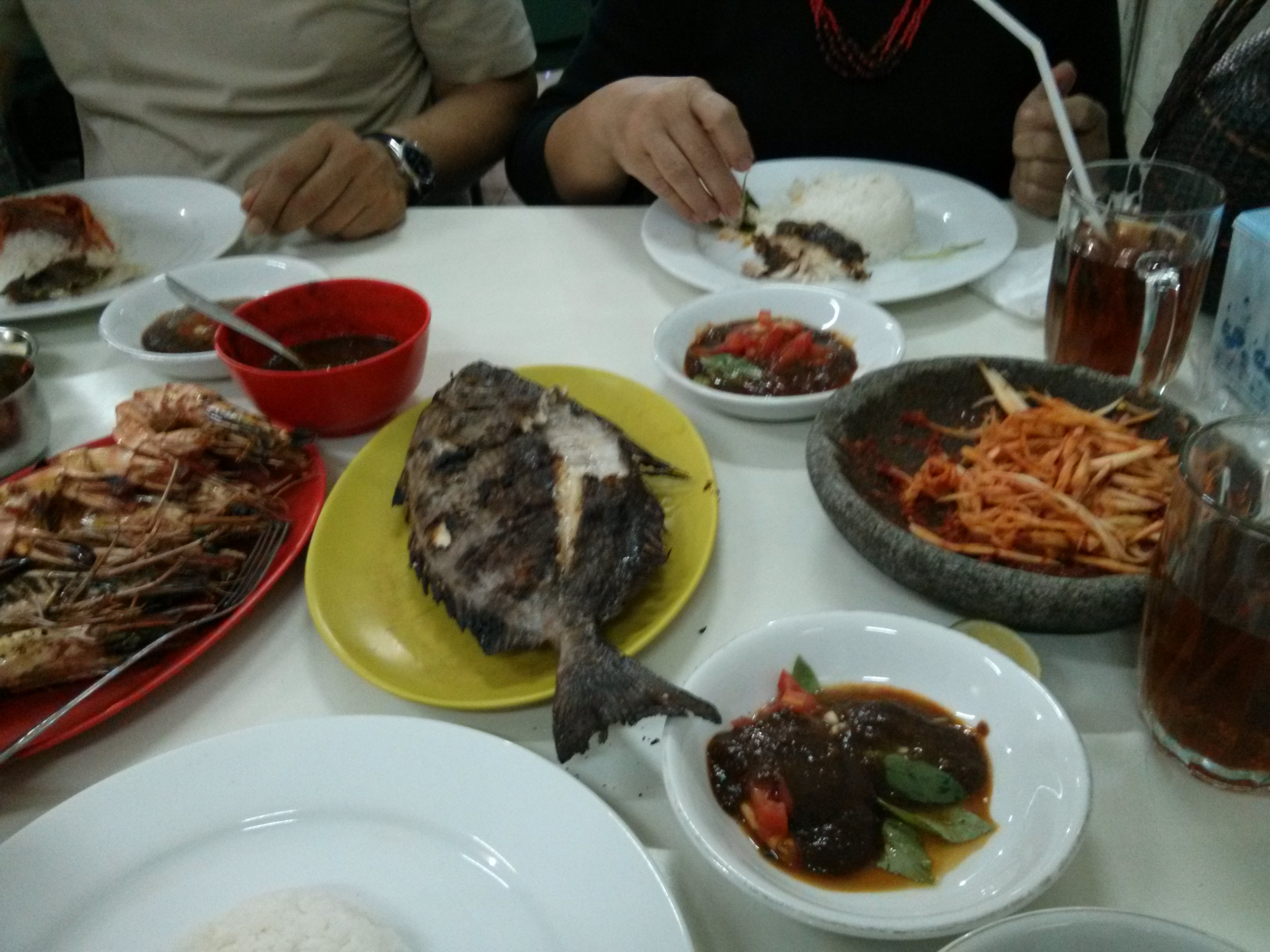
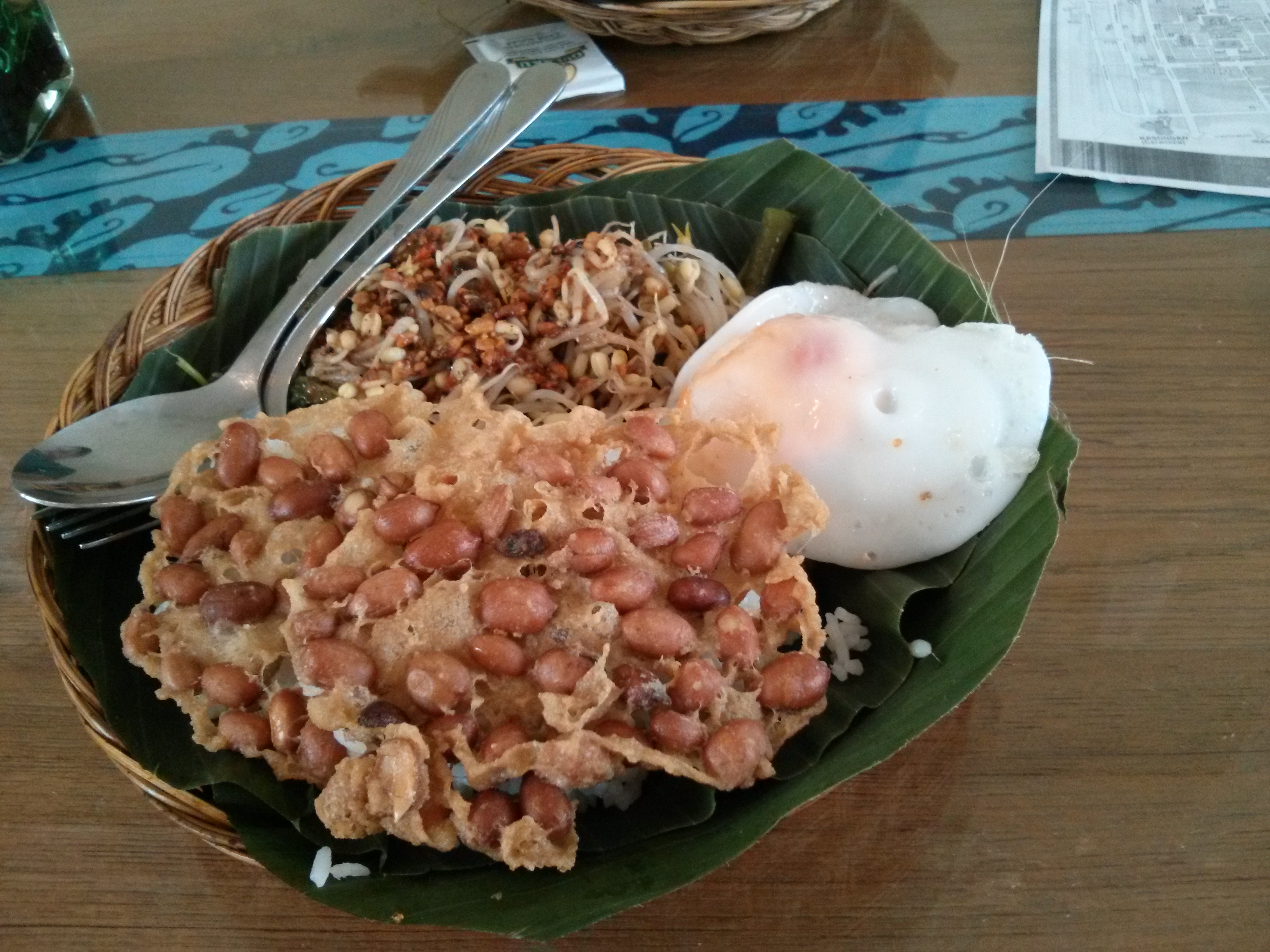
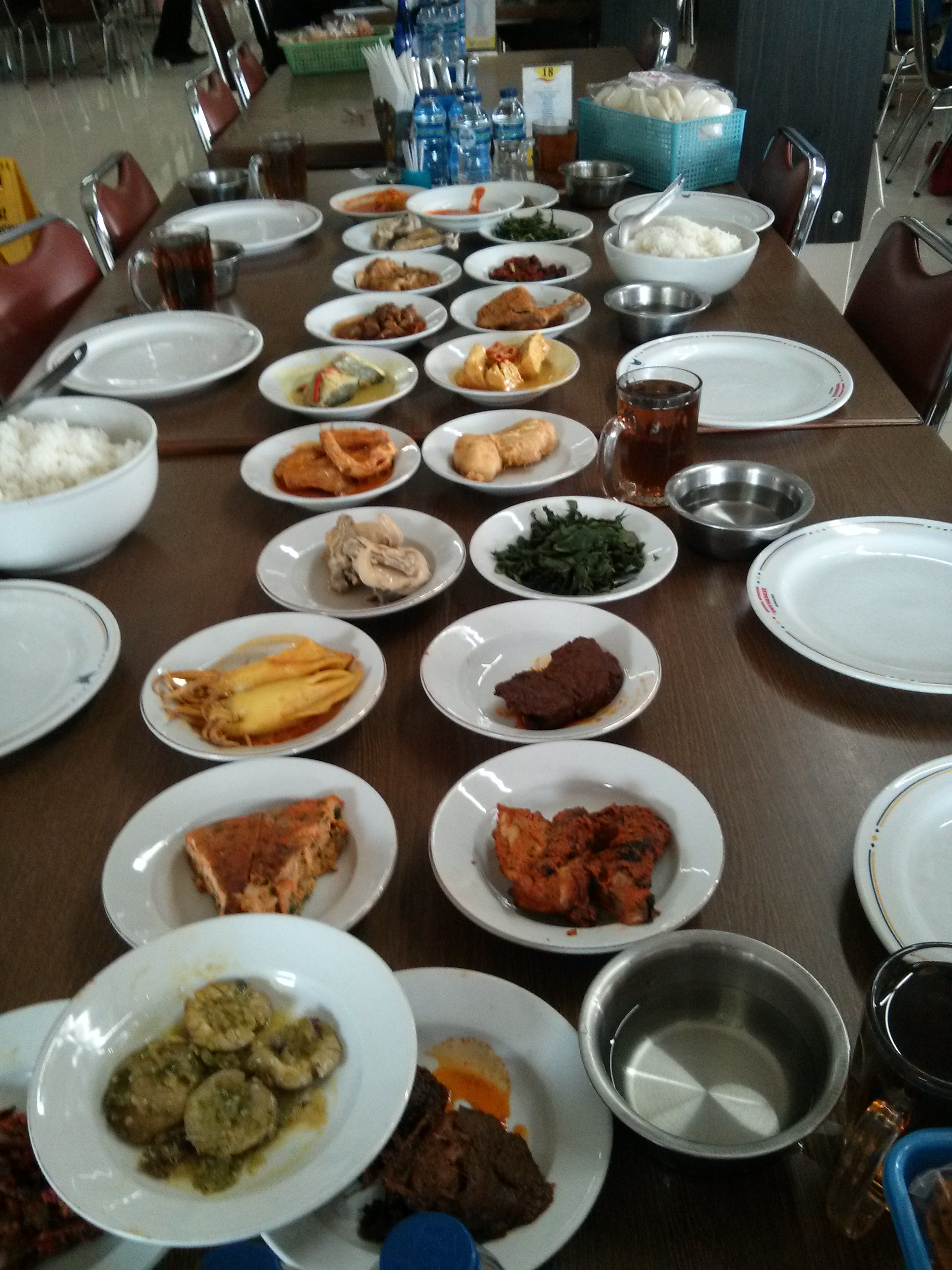
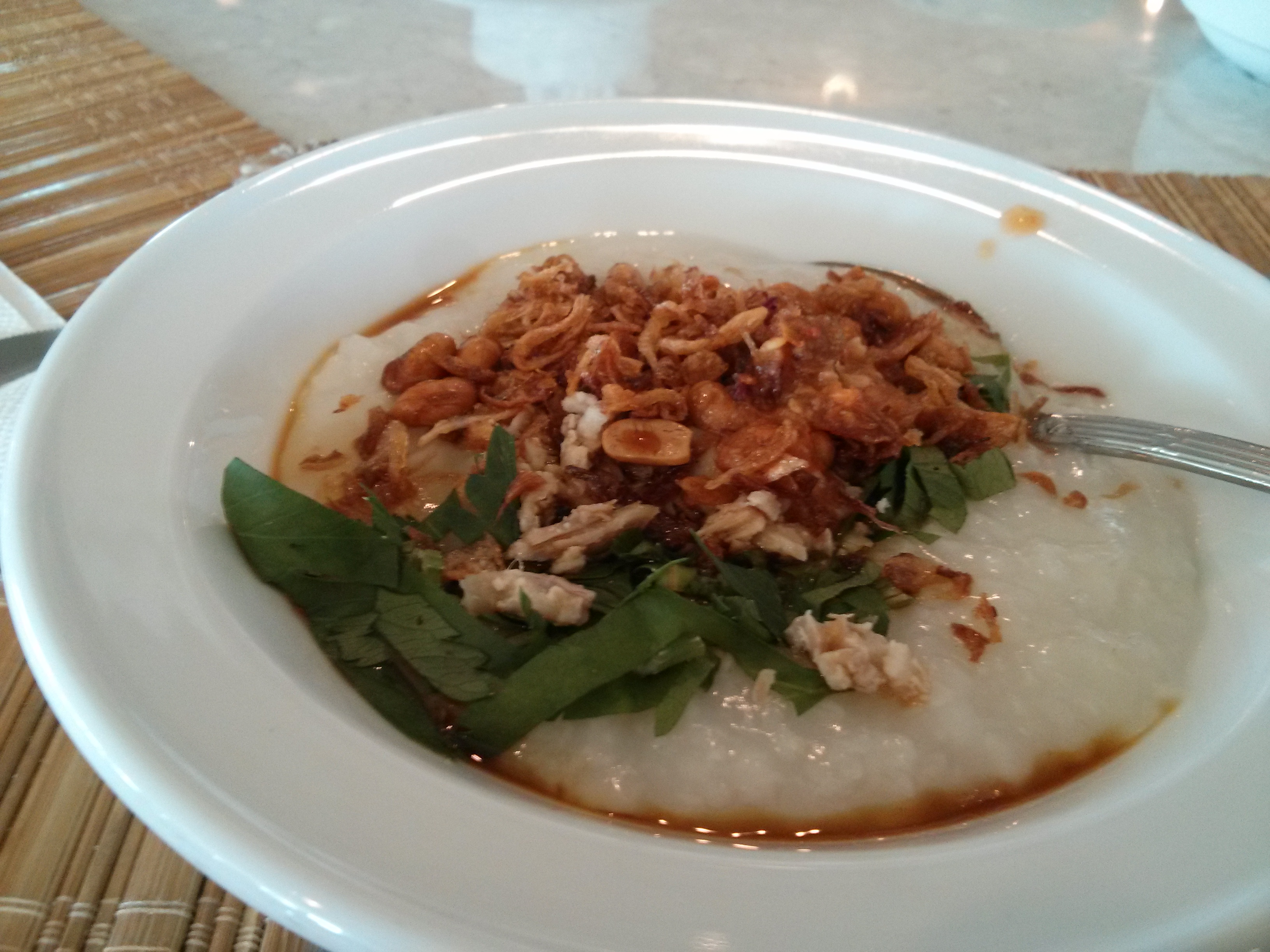
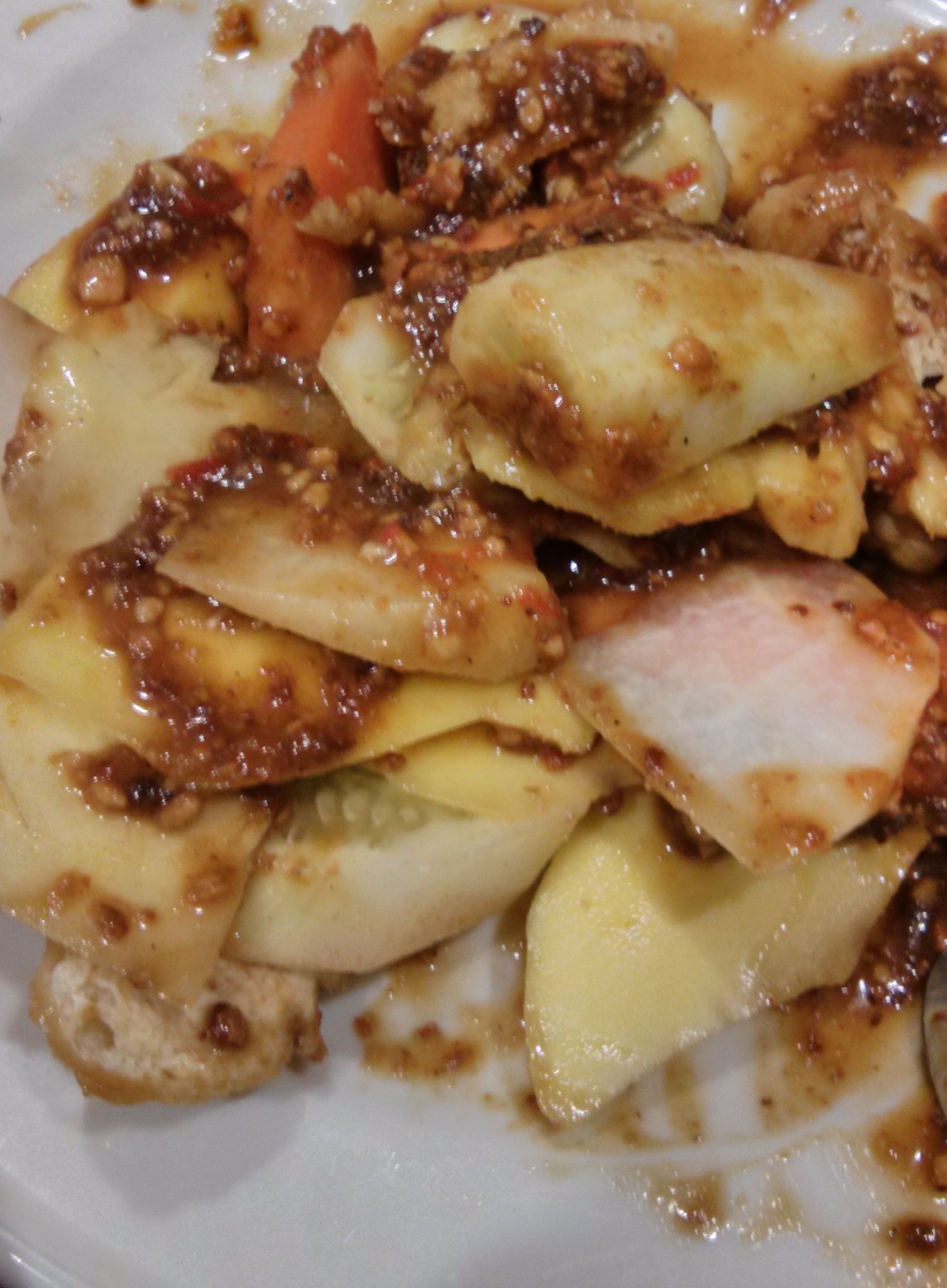
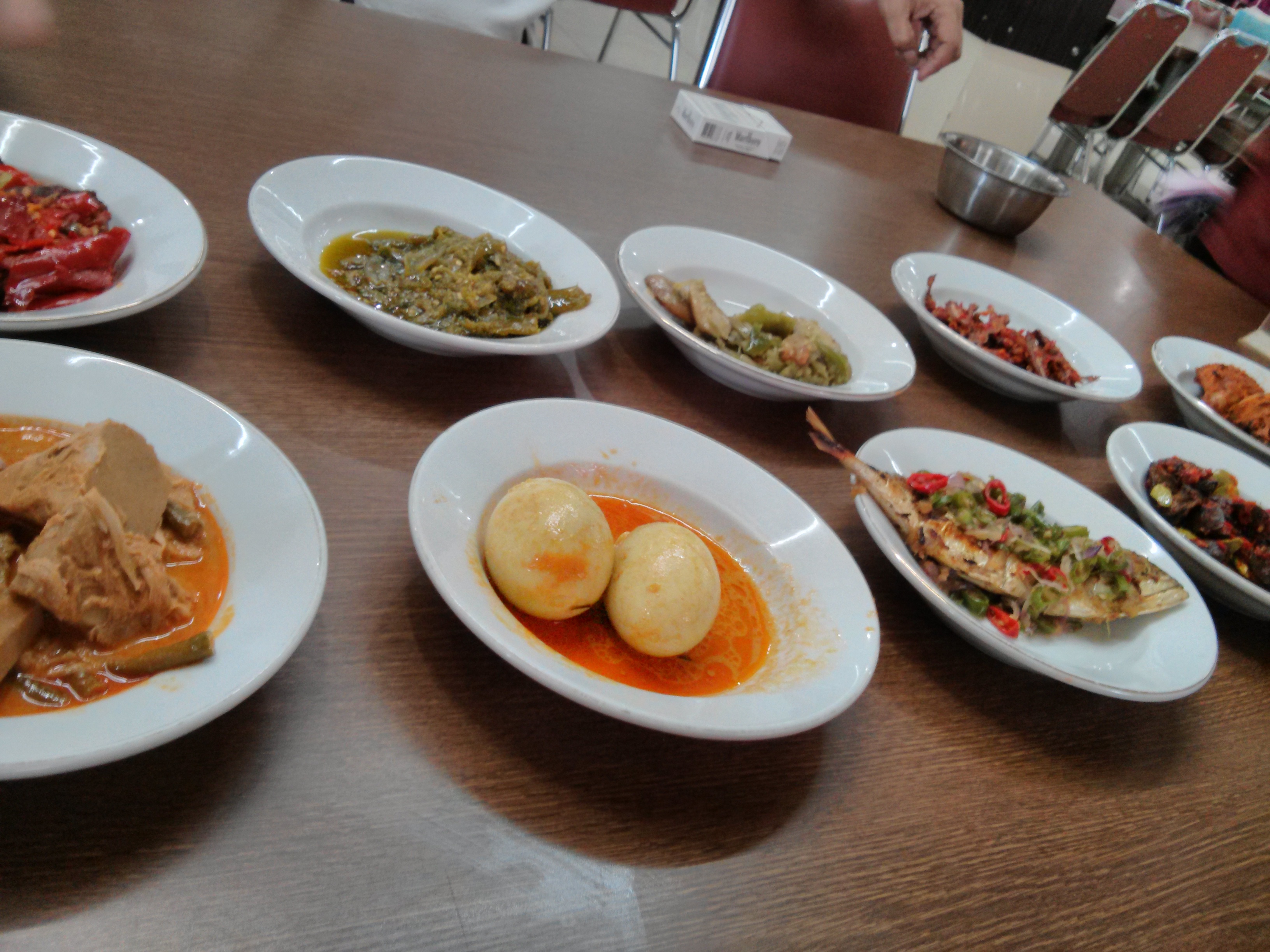
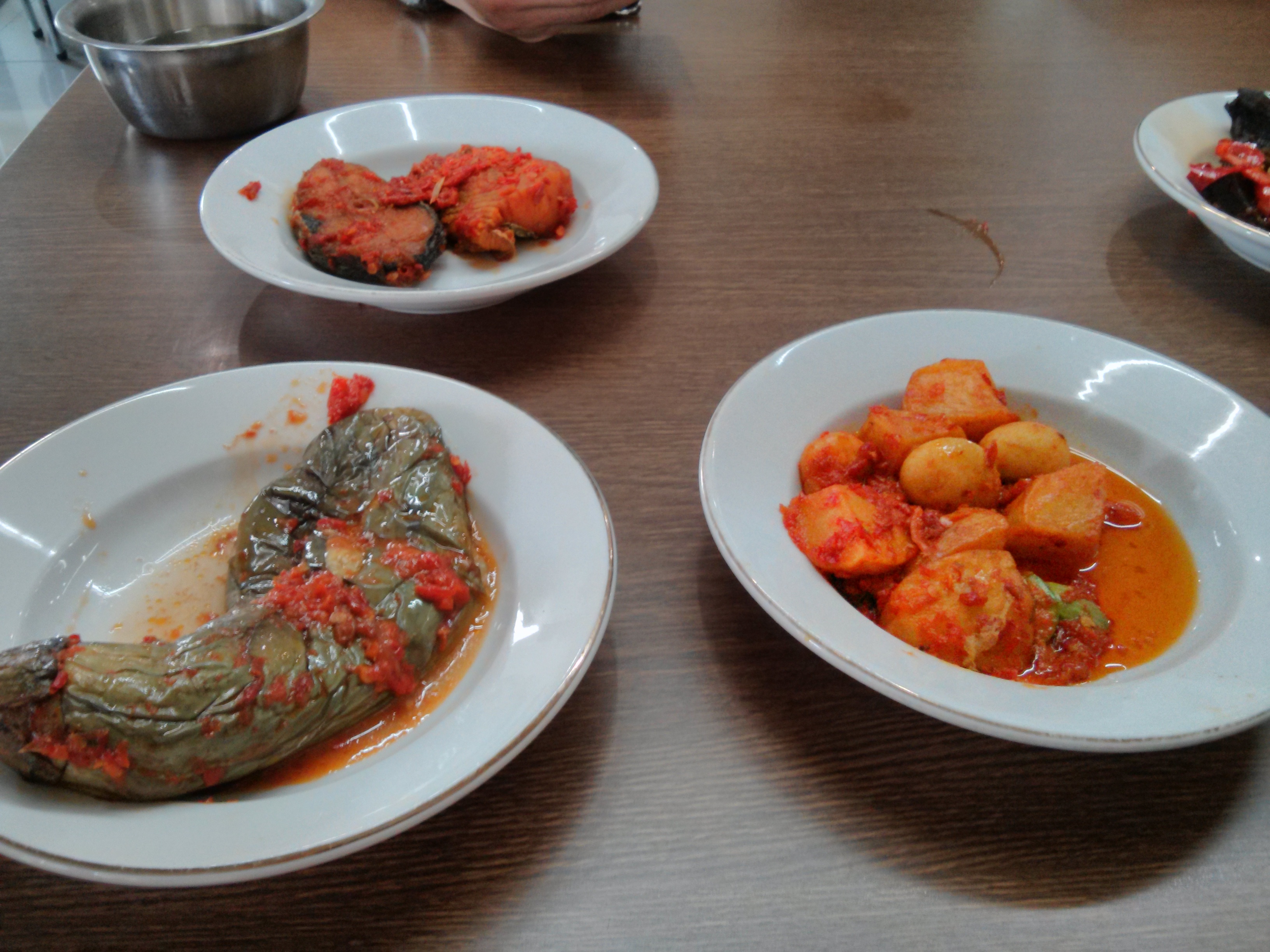
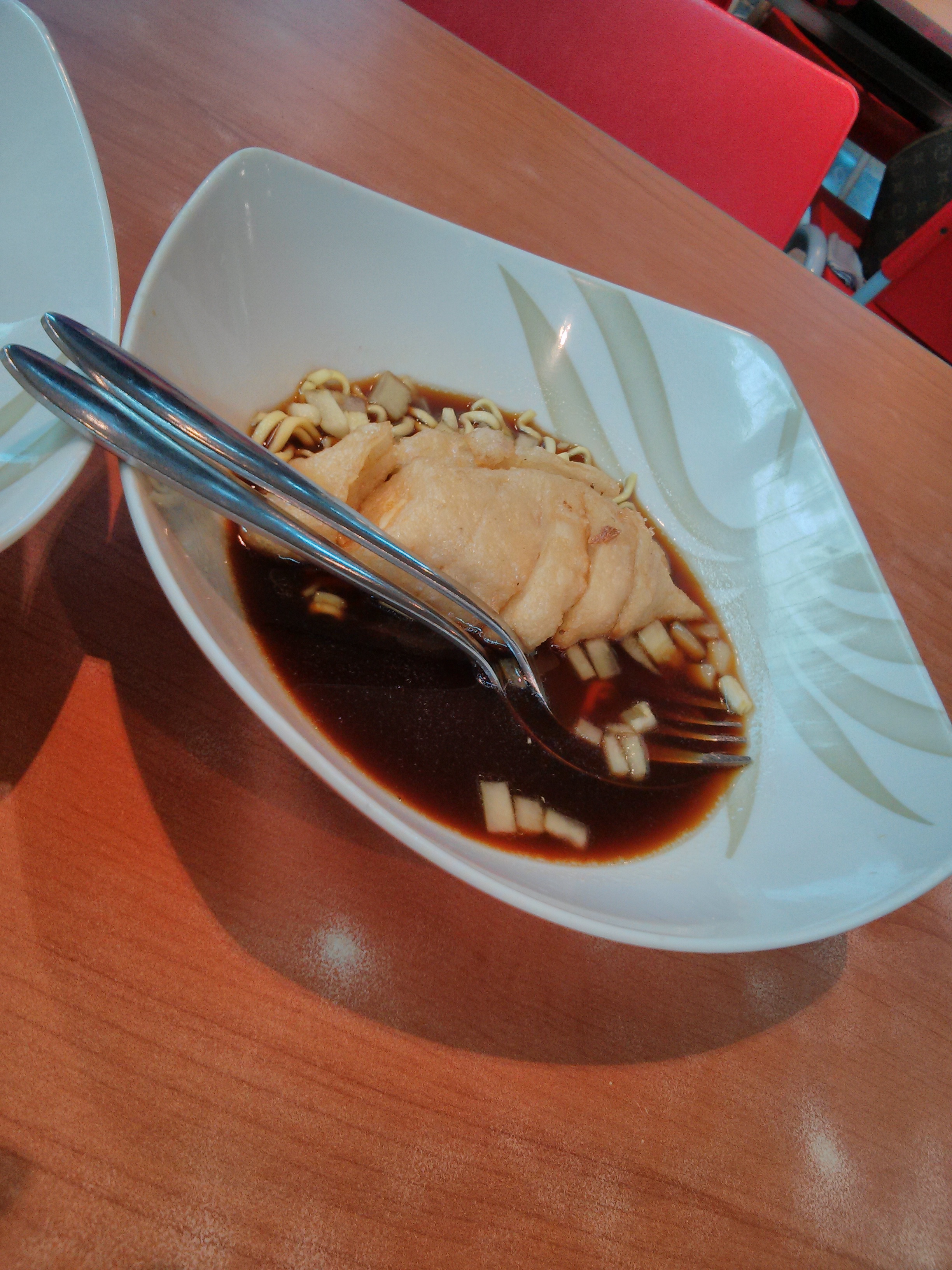
In this first blog entry in 2013, I wanted to display a few original dishes from the motherland. Since most of my cooking is heavily influenced by Indonesian taste, especially East Javanese and West Sumatran, I thought I’d share images of the real deal, our favorites, and some street food. They will also serve as my cooking inspiration later on.

Eaters discretion is advised

Also on Indonesia Travel:

Touring the Motherland Series: Bali Island

Touring the Motherland Series: Yogyakarta, Central Java

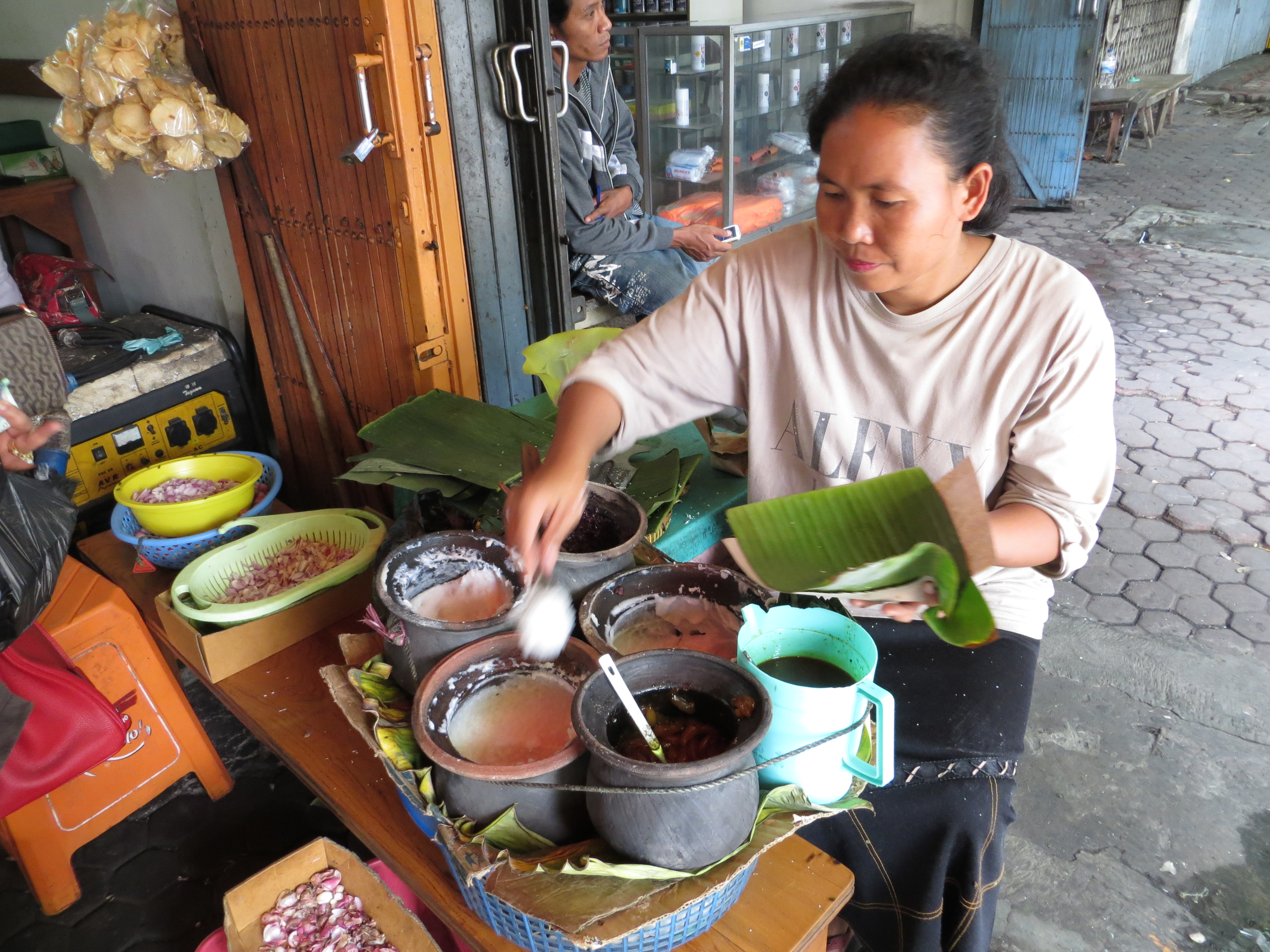
Street food: Bubur Madura
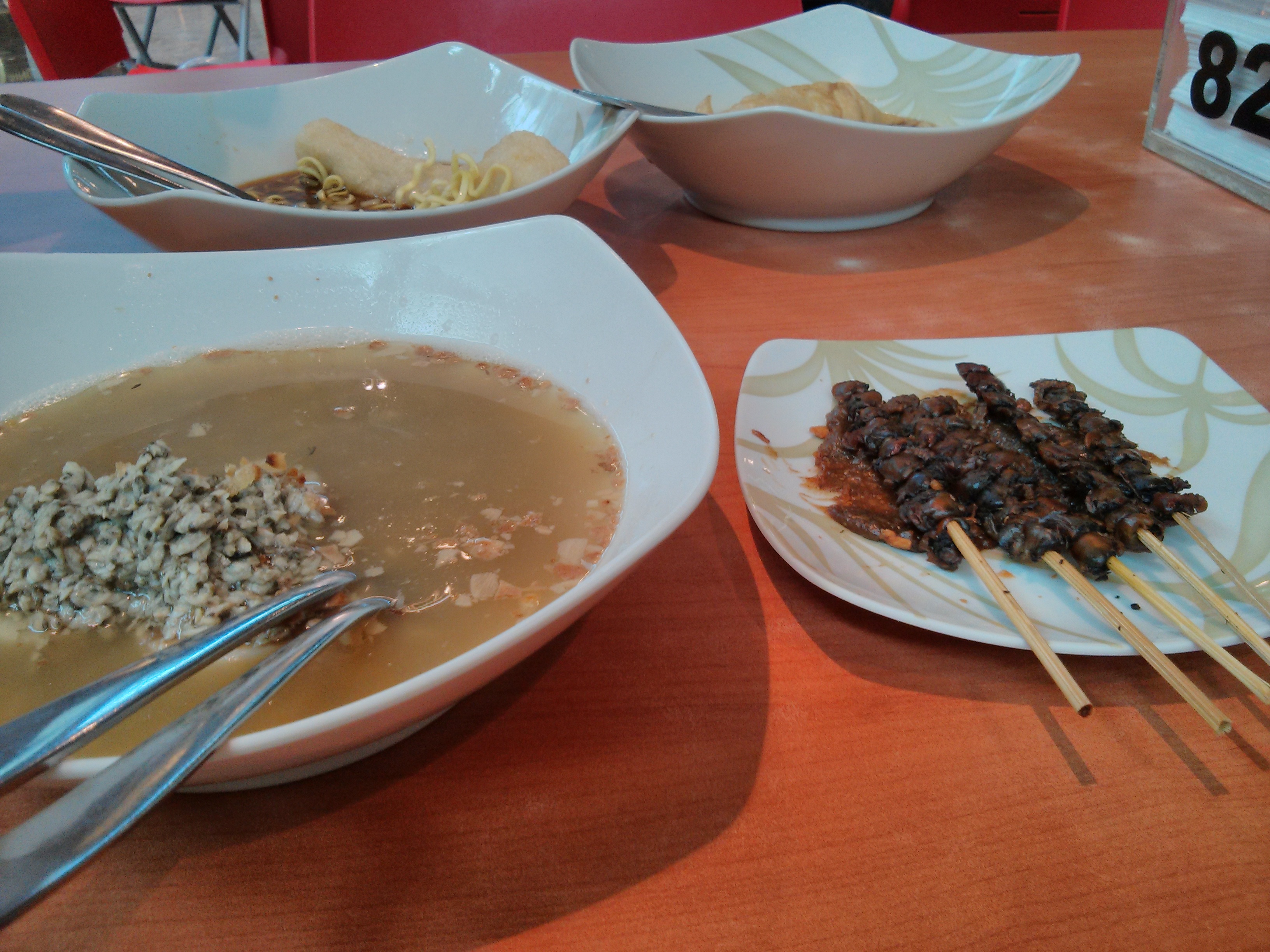
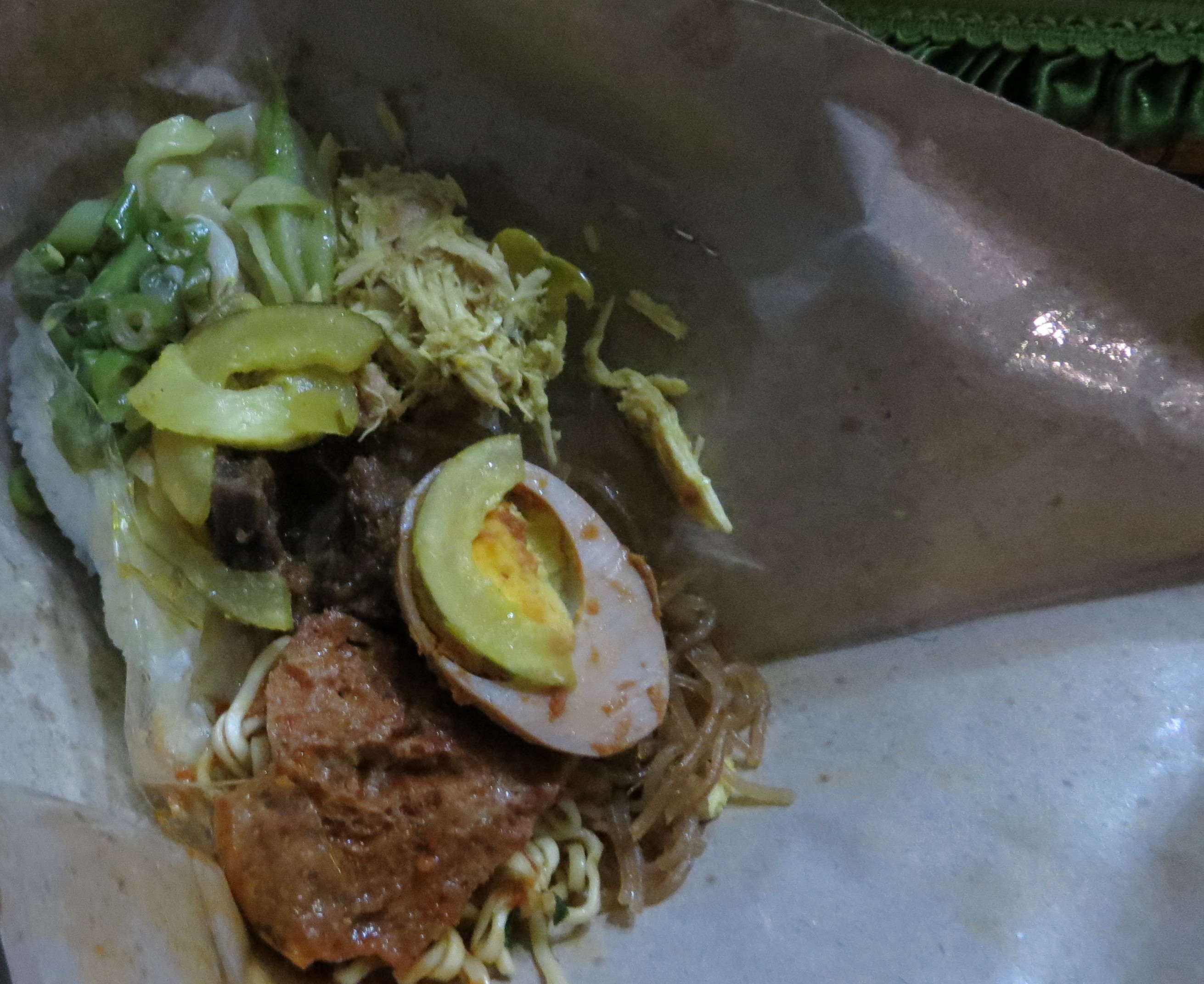
Kupang Lontong and Sate Kerang. Kupang Lontong is East Javanese traditional and favorite food. (Kupang Lontong is small shellfish with rice cake in a broth cooked with shrimp paste.)
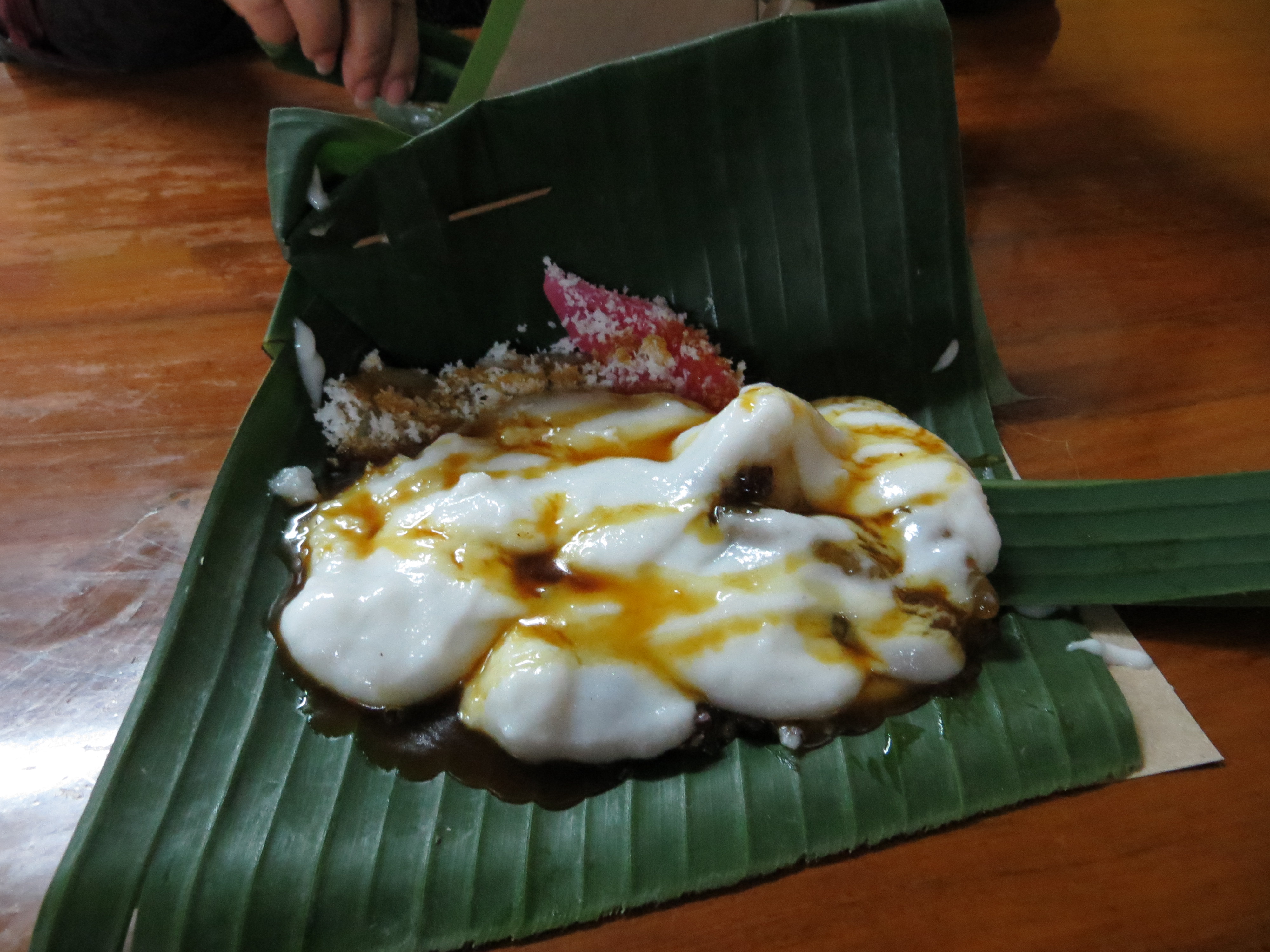
Street food: the sweet Bubur Madura (made of rice flour and drizzled with melted palm sugar.)

Touring the Motherland Series: Yogyakarta, Central Java

Last Post: Bali Island

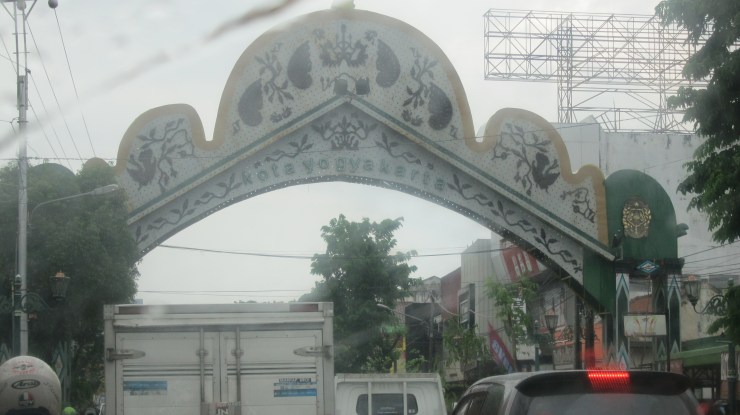
Almost every Indonesian I know loves visiting Jogja (short for Jogjakarta. Also known as Yogyakarta or Yogya.) There’s something romantic about this folksy, laid back town that holds such rich history of Java. As a cultural center of Indonesia’s most populated island, Jogja continues to preserve its tradition and uphold its cultural heritage. Tranquility and hospitality, some characteristics identical to the delightful Javanese way of life demonstrate themselves clearly in this town. They seem to send calm vibration to the town’s active streets and people. The people of Jogja are known for being patient and pleasant—traits that might easily separate them from local tourists or newcomers. A fascinating juxtaposition to observe. It’s comforting to feel the strong pulse of Javanese cultural identity in the midst of Indonesia’s growth and changes.

I remembered coming to Jogja with my family a few times when I was little and then in another occasion with my junior high classmates on a school field trip. The last time I visited Jogja was 14 years ago. I came with my childhood best friend in Surabaya. Along with her family, we helped her move to attend college in Jogja. So I wasn’t sure what the town would look like when Jeff and I planned to stop by for a weekend in December. What a relief it was to see the town’s familiar scenes. Other than the traffic jam, not much has changed. It still felt like that old romantic Jogja I had remembered from a long time ago.

One thing to note: It might be more enjoyable to visit Jogja during the off-season when it is less crowded. I was told by family and friends that tourists fill up the town during big national holidays like Christmas/New Year and Eid. We were included in that group of people who overcrowded Jogja during the New Year’s Eve long weekend! 🙂

Andong, a traditional form of transportation
Andong or horse carriage, a traditional form of transportation

Malioboro Street
Performing on the always-crowded Malioboro Street

The crowded sidewalks of Malioboro where I managed to shop tons of batik handicrafts.
The crowded sidewalks of Malioboro where I bought lots of batik handicrafts.

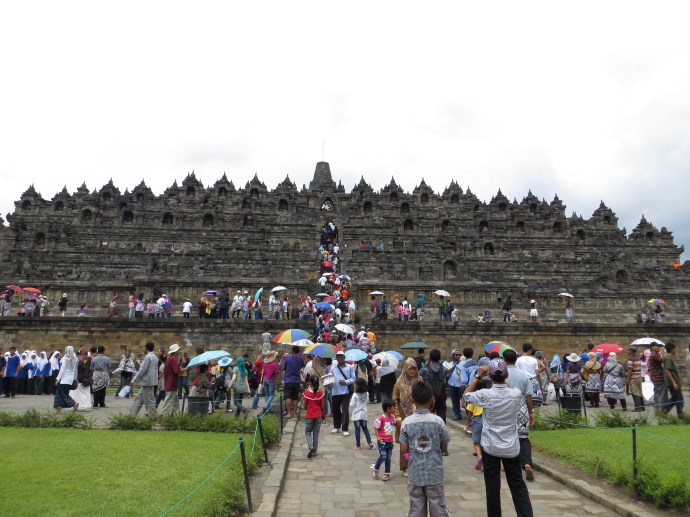
Borobudur Temple

Borobudur Temple, a 9th-century Mahayana Buddhist Temple in Magelang, a little bit outside of Jogja.
Borobudur Temple, a 9th-century Mahayana Buddhist Temple in Magelang, a short distance driving from Jogja.

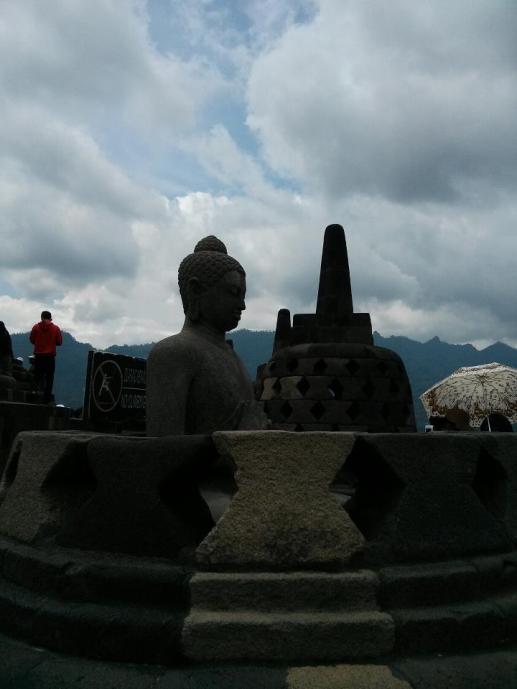
Inside the stupa
Inside the stupa

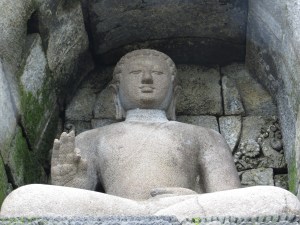
A Buddha statue inside of the stupa

The Buddha's teaching carved in stone.
The Buddha’s teaching carved in stone.

More BuddhaBuddha1

StupaThe Buddha

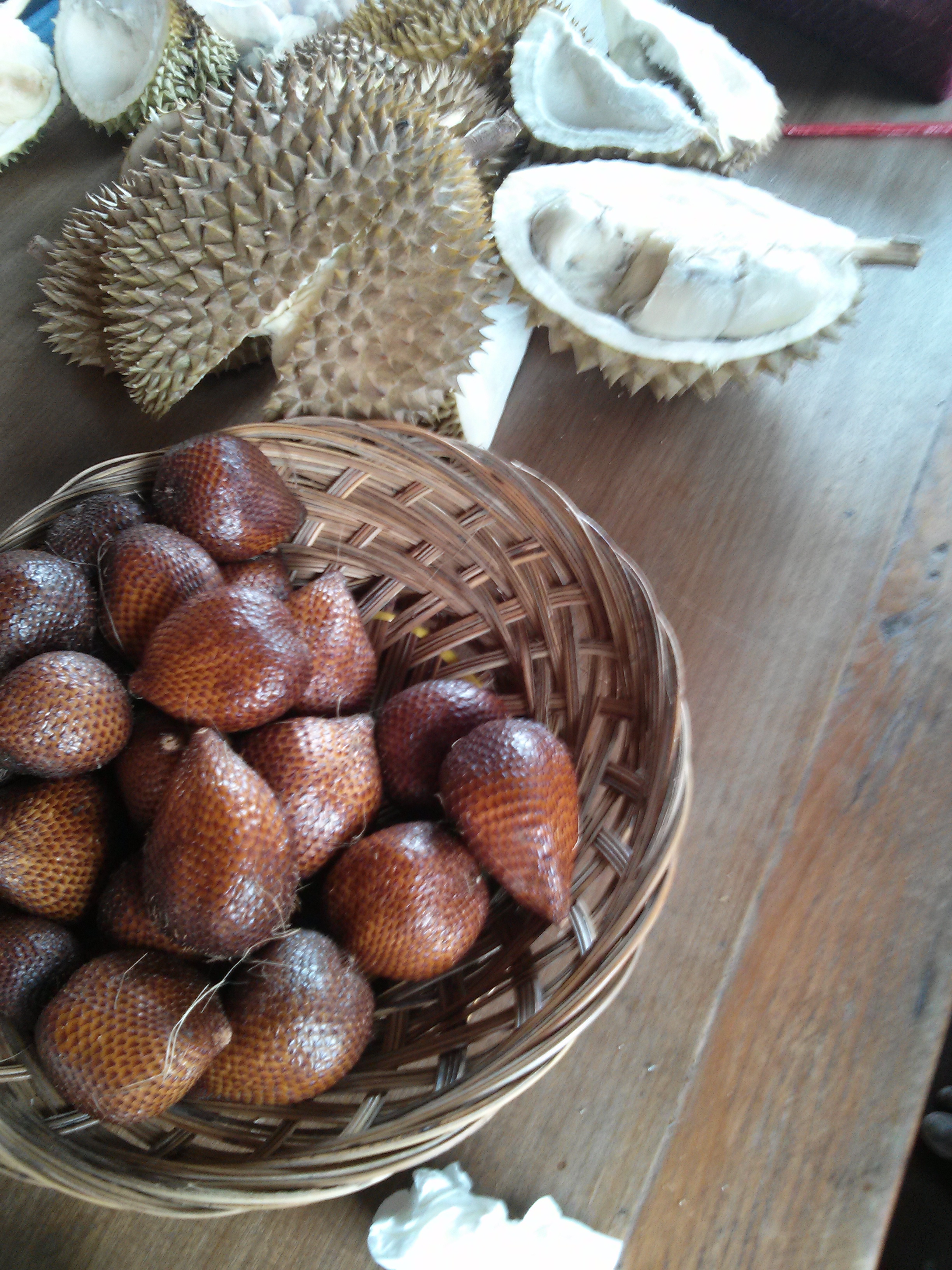
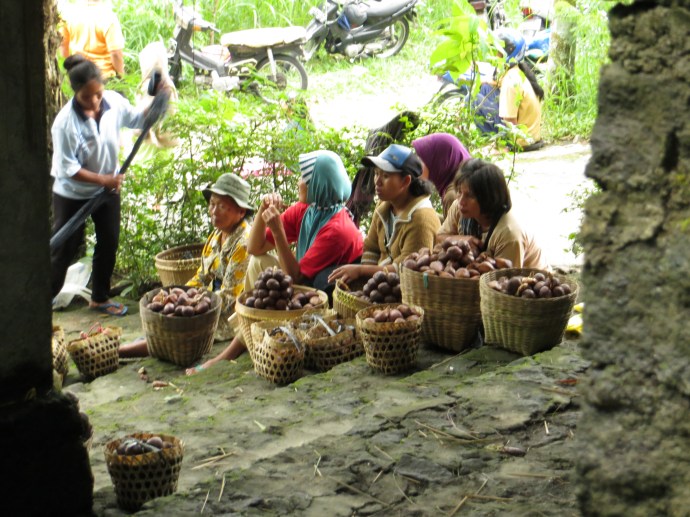
Selling salak fruit
Selling salak fruit

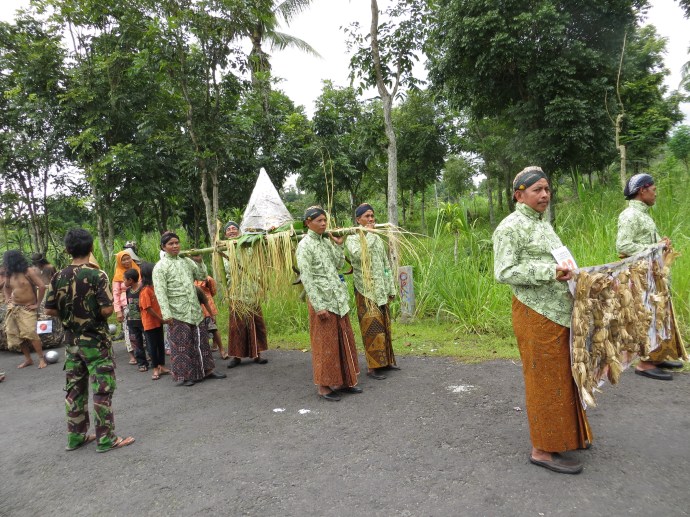
Traditional ceremony celebrating harvest time
Traditional ceremony celebrating harvest time, Kaliurang, outside of Jogja

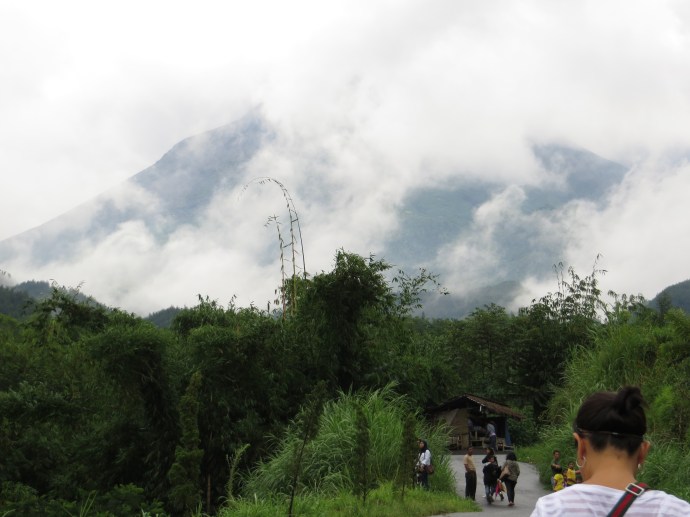
The volcanic Mount Merapi covered by clouds. Jogja is located close to the volcanic Mount Merapi.

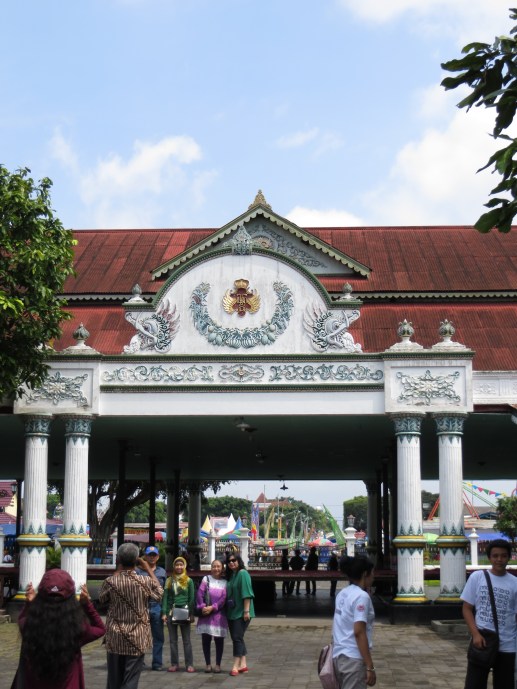
The Sultan's Palace of Jogjakarta
At the entrance of the Sultanate Palace of Yogyakarta

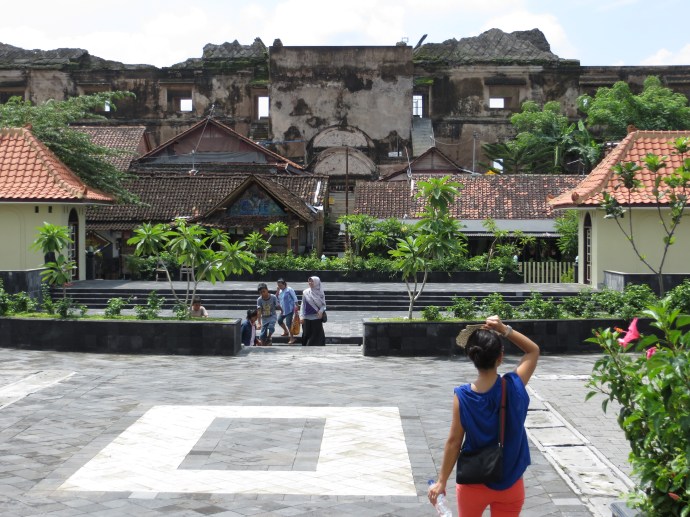
Ancient ruins of Tamansari, a bathing complex and water castle of the Sultanate of Jogjakarta
Searching for the ancient ruins of Tamansari, a bathing complex and water castle of the Sultanate of Yogyakarta

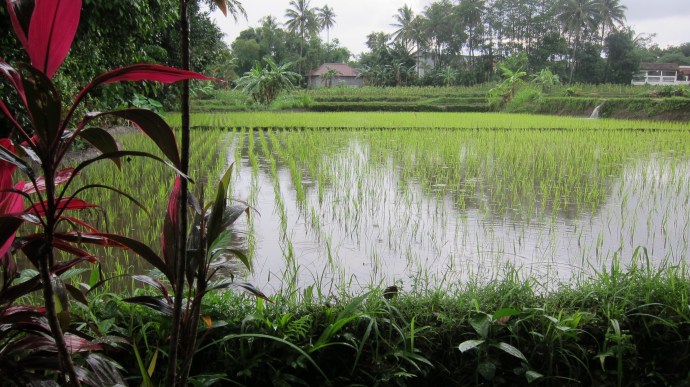
Rice field in the rain

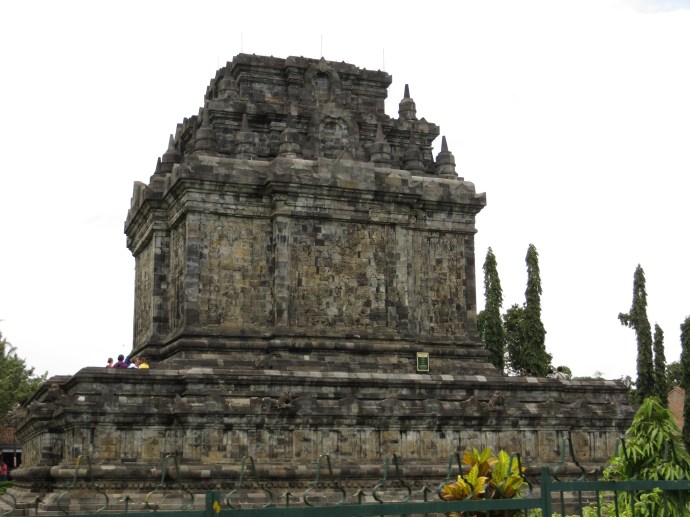
Mendut Temple

Mendut Temple, another 9th century Buddhist temple close to Borobudur

Hoped you enjoyed the read!

Next post: Surabaya and East Java

Photos property of The Traveling Chili Pepper

Touring the Motherland Series: Bali Island

It had been too long since my last visit to Bali, or Jogja in Central Java, or to Batu, Malang, or Trawas in East Java. Living 9800 miles away from home certainly has made it harder to visit Indonesia’s cultural gems. With my guy, who is also my best travel partner, we flew back to the motherland this past December. We regrouped with the families and reconnected with our native land. With unwavering travel ambition, we toured Java and Bali and re-immersed ourselves back in the culture. In a little bit over two weeks, we were reminded of the beauty, the comfort, the different faces, realities, and challenges of Indonesia. 

Here’s a glance at a country loaded with cultural diversity and natural beauty. We took pictures of parts of Java and Bali—two islands among thousands in Indonesia’s archipelago. The dissimilarity of ethnic group, language, culture, and cuisine within the nation would easily fascinate anyone. Indonesia’s islands, parts of islands, urban cities, smaller towns, and villages offer different feels and views, you’d be surprised you’re still in the same country. Rich. Rich, I tell you.

I’ll do Java on the next posts. For now, let’s check out:

Bali Island


Thanks for reading!  

Next posts: Central and East Java 

Photos property of The Traveling Chili Pepper


Baked Potato Patties

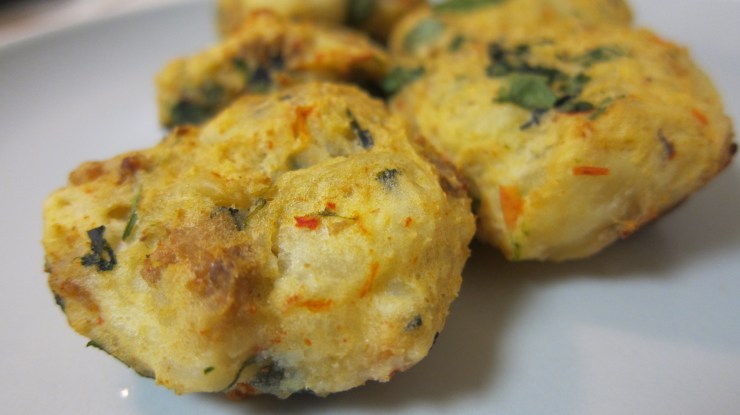
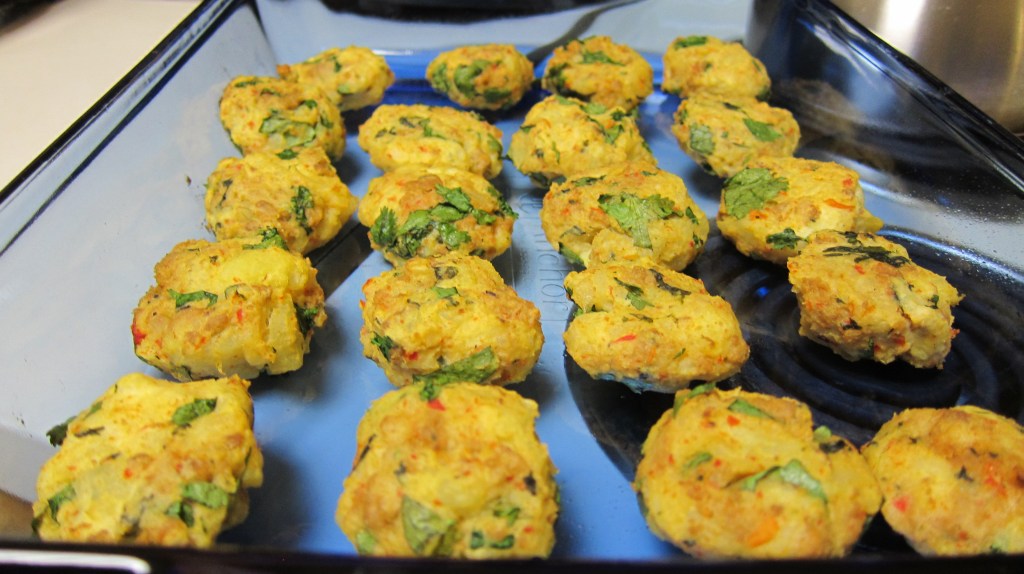
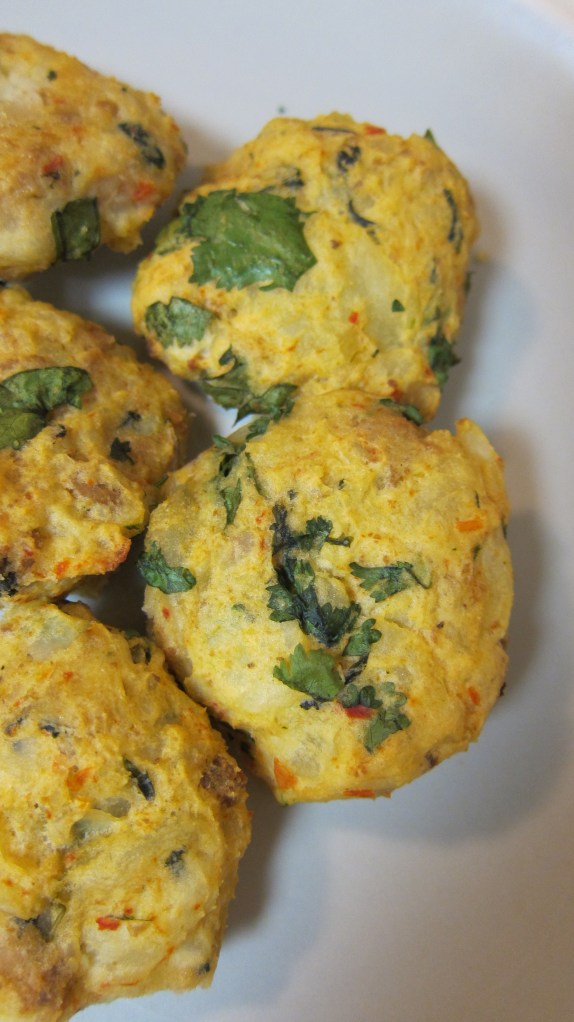
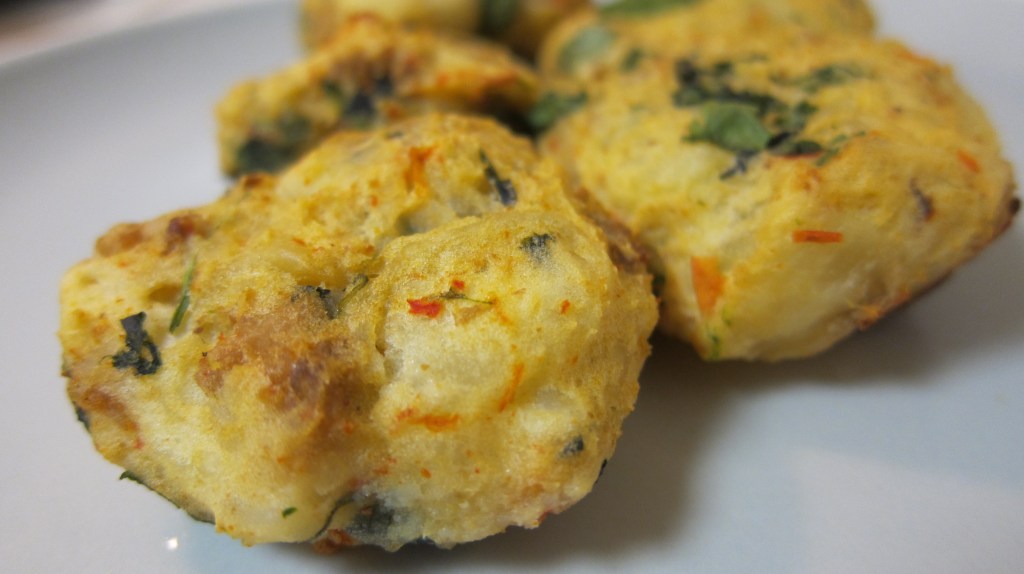
Inspired by the Indonesian perkedel daging (potato ground beef patties) and Puerto Rican pastelón, I created these baked potato patties with ground turkey, bell pepper, chili pepper, cilantro and onion. Ha! Yes, I got a little creative 🙂 The result? Savory little goodness that made a wonderful appetizer!

Hope you like it!

Fresh out of the oven

We need:

  • 3 Russet potatoes (peeled and diced)
  • 1/2 pound of ground turkey meat
  • 1 bell pepper (chopped)
  • 3-4 garlic
  • 3 hot finger peppers
  • 1/2 of sweet onion
  • 1/2 cup of cilantro (chopped). If you’re not a fan of cilantro, you could substitute with either parsley or green onions.
  • One tablespoon of vegetable oil
  • One egg
  • Salt
  • Pepper

Steps:

  • Preheat the oven to 400 degrees Fahrenheit
  • In a medium pot, cover the potatoes with water, add a little salt, and boil until fork tender (for me it took about 30-40 minutes)
  • Mix and chop the bell pepper, garlic, hot fingers, and sweet onion in a food processor
  • Heat up a medium pan and add one tablespoon of vegetable oil
  • Cook the peppers-garlic-onion mixture for a little bit until the moisture evaporates
  • Add the ground turkey and cook until it is well done. Set aside.
  • After the potatoes are done cooking, remove from water, and mash them well
  • Add the egg into the mashed potatoes and mix them together
  • Mix the mashed potatoes with the meat, chopped cilantro, and using both hands create 15-18 patties
  • Spray a baking tray with either olive oil or vegetable oil
  • Place the patties on the tray, brush the top of the patties with a little bit of vegetable or olive oil, and bake for 15-20 minutes until they turn golden light brown in color

Baked Potato Patties Baked Potato Patties 2

Easy Pasta for Dinner: Mushroom Bourguignon

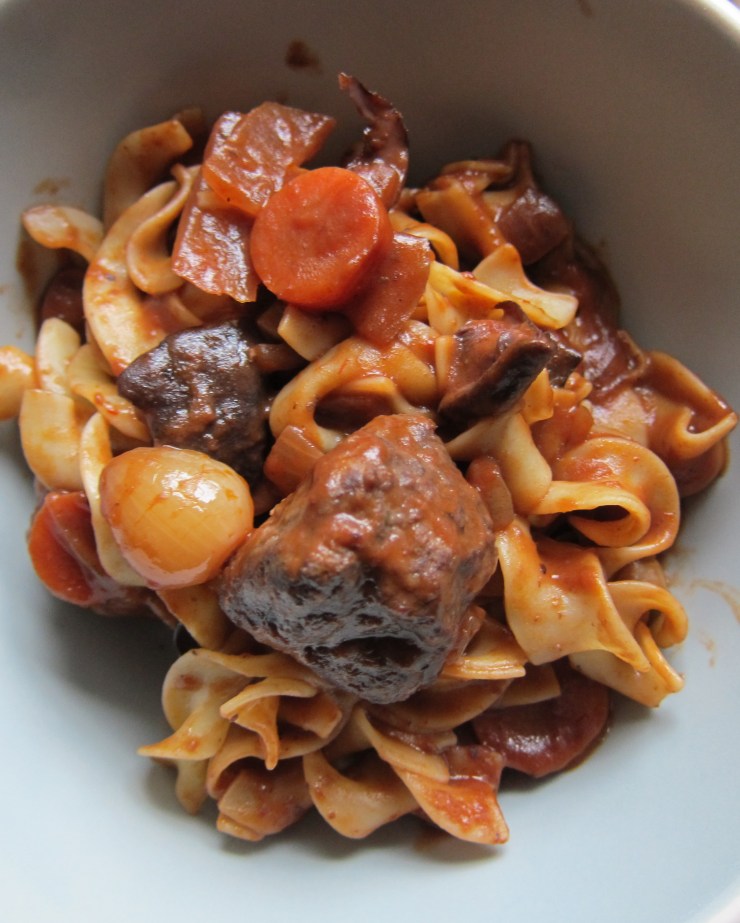
Feeling like pasta for dinner tonight? Something with mushroom and vegetables in red wine and tomato sauce?

Try this easy and delicious Mushroom Bourguignon recipe. Yes, I did put the word “easy” and “bourguignon” on the same sentence. This recipe offers a much shorter cook time than Ina Garten’s version I had tried a while back. I haven’t worked out the courage to attempt to do Julia Child’s. Maybe someday. But for now, I am happy to have found another good recipe suitable for everyday dinner. Hope you like it too!

Note: I did a couple of minor adjustments to the Mushroom Bourguignon’s recipe:

  • I used Shiitake mushroom instead of the Portobello or Cremini called by the recipe
  • I also added some meatballs to the pasta dish (optional)

Mushroom Bourguignon

Original recipe by Deb Perelman of Smitten Kitchen

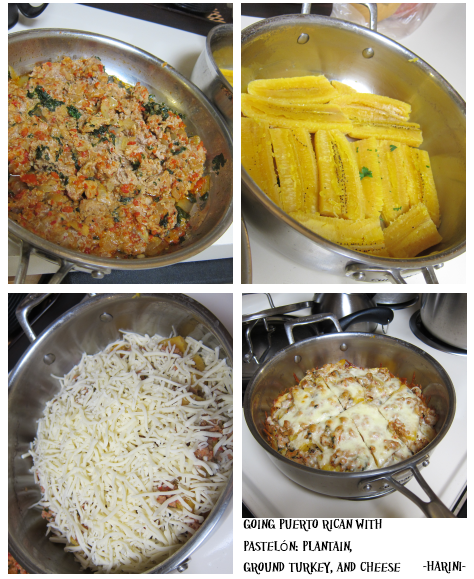
Going Puerto Rican with Pastelón: Plantain, Ground Turkey, and Cheese

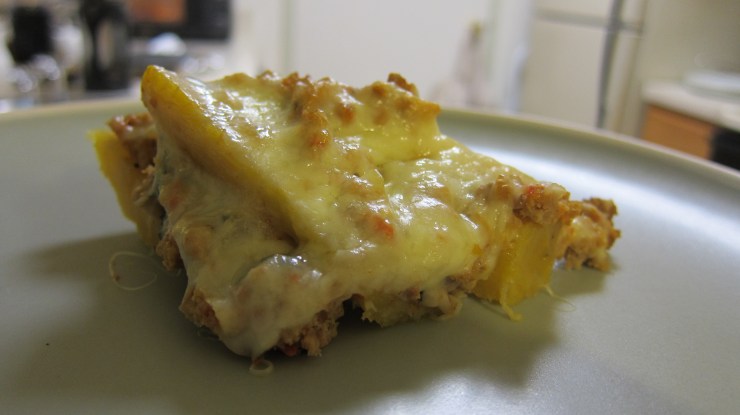
Pastelón
Pastelón

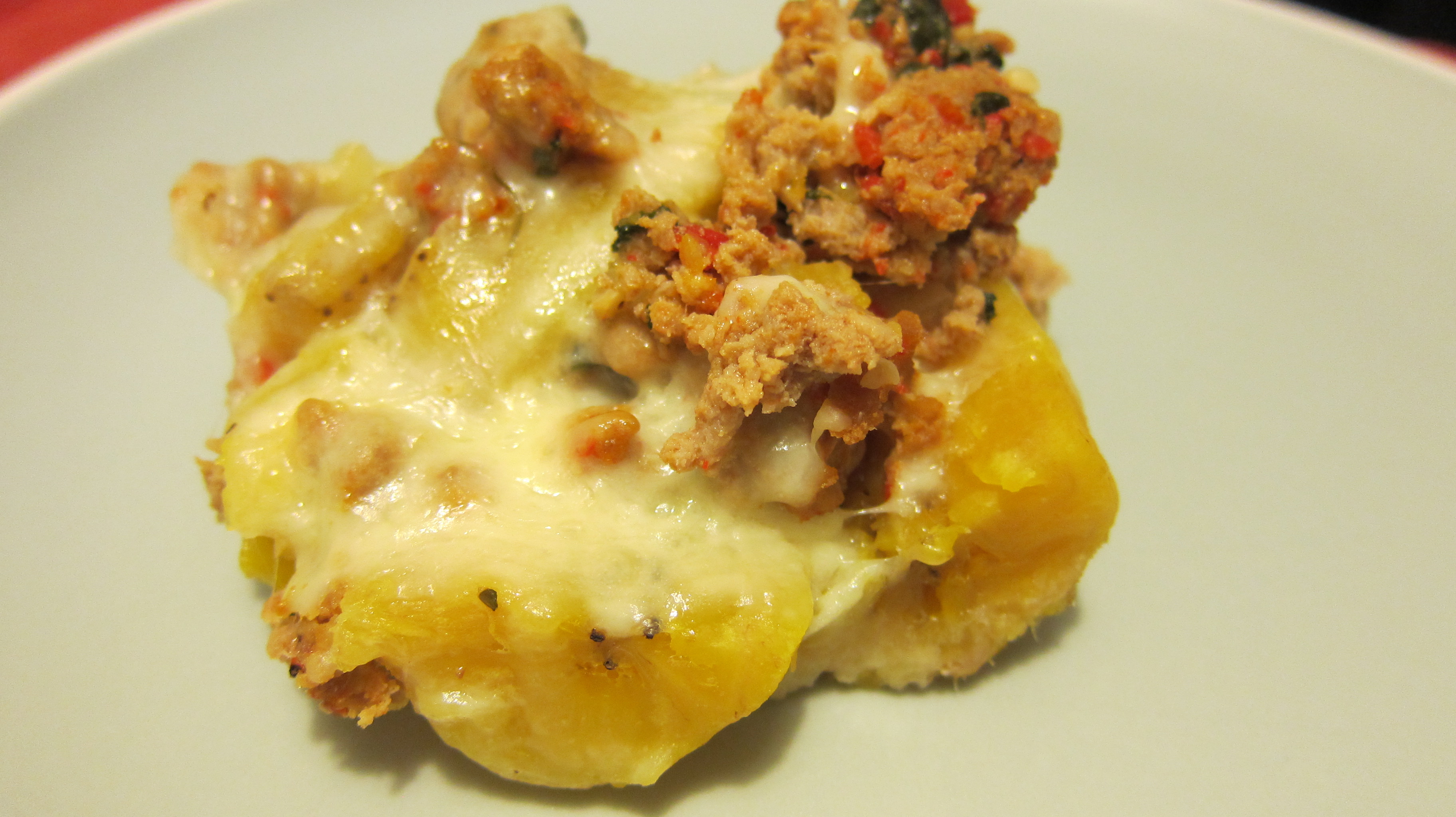
Plantain topped with ground turkey and mozzarella

One of the perks of having friends from different cultures is the exposure to many delicious dishes. Zulma, a dear friend of mine, has successfully introduced me to Puerto Rican’s mofongo, tostones, and pastelón. (Mofongo and tostones are my must-eat whenever I visit the island.) A few days ago, over the phone, Zulma told me that she was making pastelón for dinner. Feeling intrigued, I used her recipe as guidance in making one myself. Usually described as “plantain lasagna”, the dish offers a good combination of sweet and savory. The plantain gives out a sweet taste while the ground turkey, cooked with onion, garlic, peppers, and cilantro, makes a fantastic meaty topping. And of course, the melted mozzarella sealed everything nicely. Buen Provecho!

Here’s my version, with a little twist 😉
We’ll need:

  • 4 ripe plantains (Per Zulma’s recommendation, I got the yellow ones with black patches all over the skin and with sweet aroma.)
  • ½ pound of ground turkey (Usually made with ground pork or beef)
  • ½ of sweet onions (chopped)
  • 3 garlic (chopped)
  • ½ cup of chopped cilantro (Zulma’s recipe calls for long coriander leaves but I couldn’t find them so I went with cilantro)
  • 1 red bell pepper (chopped)
  • 3-4 hot finger peppers (chopped). This is totally optional. (I made mine spicy, of course :))
  • 1 or 2 cups of shredded mozzarella cheese

Pastelon

Steps:

  • Fill a medium pot with water and bring to boil
  • Cut the peeled plantains in the middle
  • Boil the plantains for 15-20 minutes
  • Once cooked, remove, and let them cool down before slicing them lengthwise
  • Preheat oven to 375 degrees F
  • Place the sliced plantains on a baking dish that has been sprayed with vegetable or olive oil
  • On the stove top, heat a medium pan with a tablespoon with vegetable oil. Cook the onion, garlic, and bell and hot peppers for two minutes. Add ground turkey, salt, and black pepper. Combine and cook well.
  • Cover the sliced plantain with the meat, top with shredded cheese, and place it in the oven for 10-12 minutes until the cheese is melted.
  • Remove from the oven and let it cool down for a bit before serving

My special thanks to Zulma

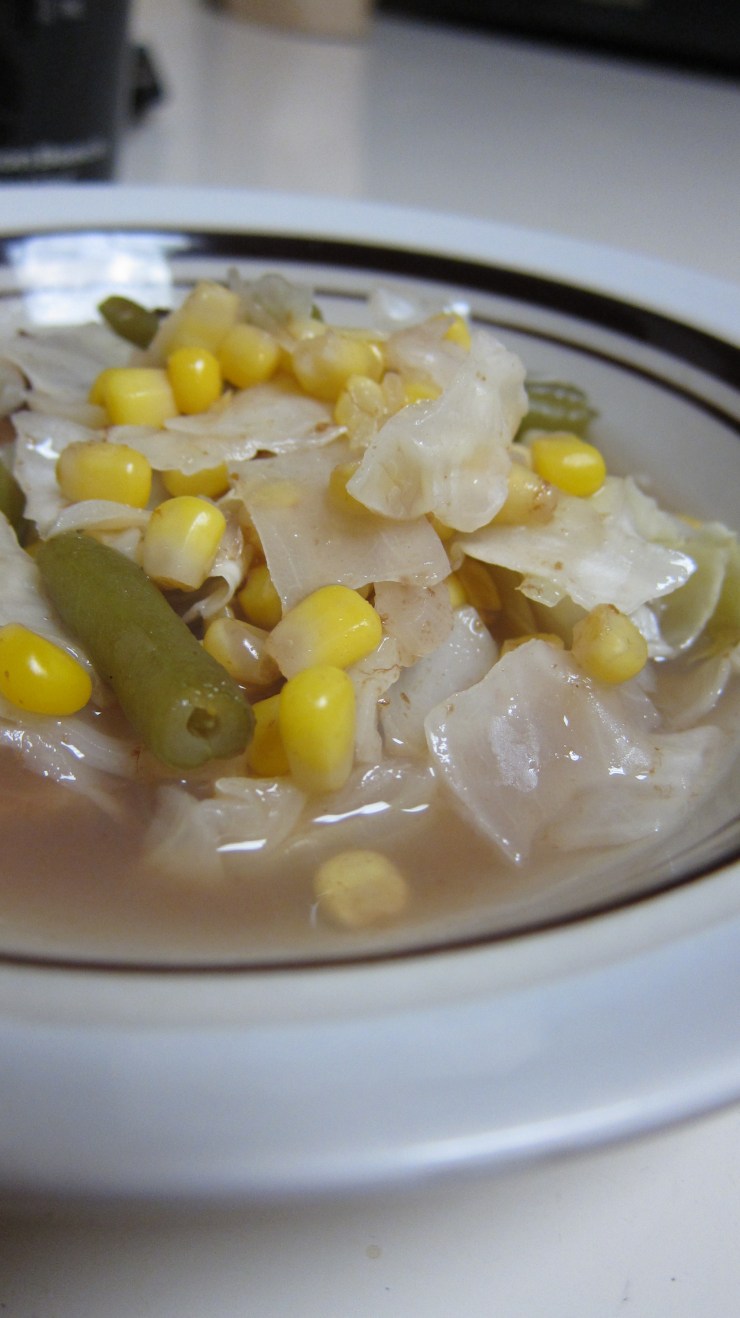
Sweet Corn, Green Beans, and Cabbage in Tamarind Soup

(My version of sayur asem)

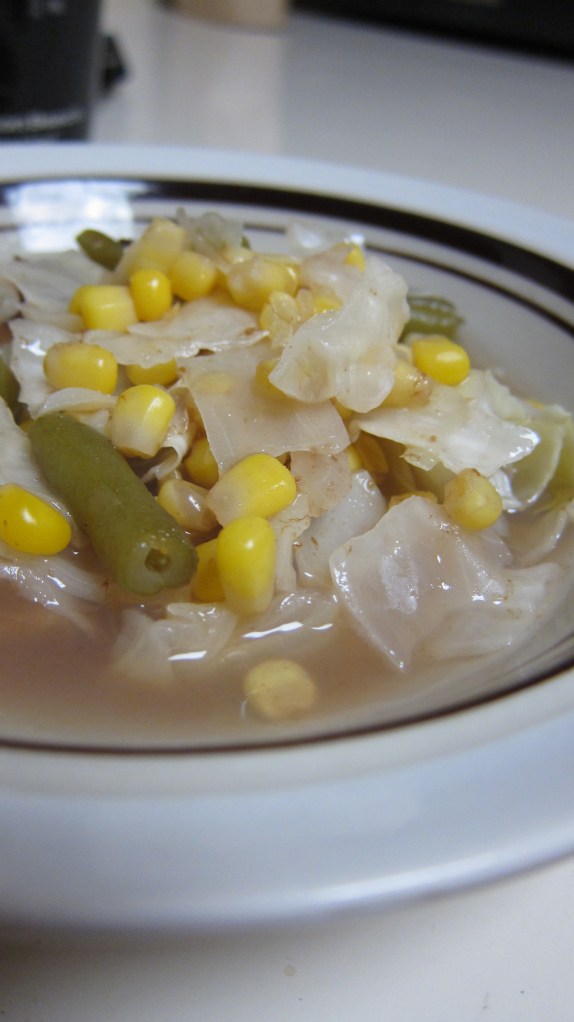
Sweet Corn, Green Beans, and Cabbage in Tamarind Soup

Here’s another favorite, Indonesia-origin, vegetable dish in our home. Though its main ingredient is tamarind, a sour fruit typically used in many Southeast Asian cuisines, this soup has a lot more to offer than just a tangy flavor. It has a good balance of sweet, sour, and spicy. The vegetable selections of corn, green beans, and cabbage give crunchy texture to the dish, while a little bit of hot peppers adds a nice punch.

Here’s my take on this East Java version of sayur asem or the vegetables sour soup:

List of things we need:

  • 1 small bag of frozen sweet corn
  • 1 cup of green beans cut into shorter lengths (traditionally Indonesians use Yardlong Beans instead of green beans).
  • 1 small cabbage (remove wilted outer leaves, halve, remove the stem, and slice). If you can’t find a smaller cabbage, use ½ of the regular size.
  • 1 inch cube cut of seedless wet tamarind/ tamarind block
  • 4 shallots
  • 3 garlic
  • 4 Candlenuts
  • A pinch of shrimp paste
  • 2-3 Thai peppers
  • Salt
  • ½ inch cut of Galangal root for the aroma

Cooking steps:

  • Fill 1/3 of a large pot with water over medium heat
  • Chop and mix shallots, garlic, Candlenuts, shrimp paste, Thai peppers in a food processor
  • Add the mixture into the pot along with tamarind, Galangal root and a little bit of salt. Bring to boil, reduce the heat a little bit, and let the broth cooks for another 20-30 minutes or until the tamarind dissolves.
  • Remove galangal root and tamarind pulp, before adding the vegetables into the broth, using a food colander or strainer and a big bowl. (Strain the broth using a colander or a food strainer into the big bowl and then return the broth back to the pot.)
  • Add the vegetables into the pot and bring to boil.
  • Turn of the heat and cover the pot with a lid. I let the vegetable soup rest for half hour to an hour before serving. That way the vegetables have some time to absorb all of the wonderful flavors. It taste even better the next day too!

Serve 4-6.