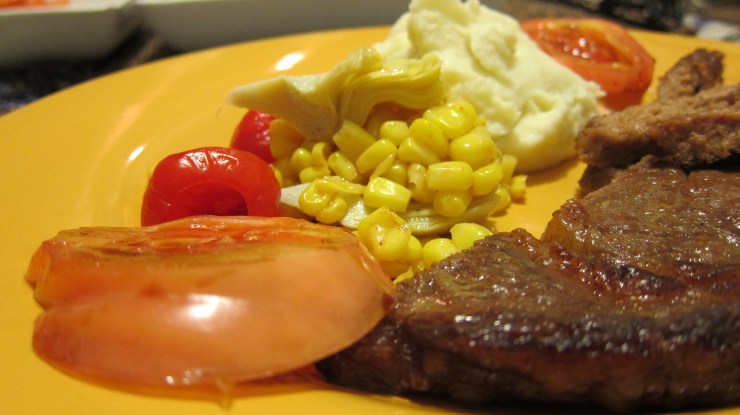
Sugar and Bourbon Steak

Steak night by HR

Craving for a good steak for dinner tonight? I recently tried this great and easy recipe: Sugar Steak with Bourbon from Amanda  (Amanda & Merrill) at Food52.

Steak fiesta by HR

The recipe called for bourbon as part of the steak marinade. I know. You’re probably thinking about the strong aroma of that potent liquor. No worries. Once the steak is cooked you’d only end up with a tender, juicy, sweet, and savory steak sans the bourbon scent.

I adjusted the recipe slightly to serve dinner for two instead of for three to four people.

Ingredients:

  • I went with 3/4 pound of rib eye (instead of flank steak as the recipe suggested)
  • Two tablespoon of light brown sugar
  • Three tablespoon of bourbon
  • I used a pinch of cayenne pepper and chili pepper for an extra kick 😉 (instead of red pepper flakes)
  • Kosher salt

Here’s how I did mine:

As suggested by the recipe, I mixed the bourbon, sugar, cayenne pepper, chili pepper, and salt in a bowl and rubbed it on the steak. I transferred the steak and its marinade into a ziplock bag and let it sit in the fridge for two hours. Then I broiled it for about 7—8 minutes on each side until the temperature reached 150 degrees Fahrenheit for medium well (instead of medium rare). I followed Amanda’s suggestion for the 4—6 inches tray distance from the broiler.

I served the steak with sweet corn-pickled sweet and spicy pepper-roasted artichoke salad, slices of heirloom tomato drizzled in olive oil and balsamic vinegar, and celery root potato puree. What a fantastic dinner!

Buon appetito and thanks for stopping by.

Cooking inspiration for this entry came from:

Sugar Steak with Bourbon by Amanda (Amanda & Merrill) at Food52

Celery Root Potato Puree by Anne Burrell at Food Network

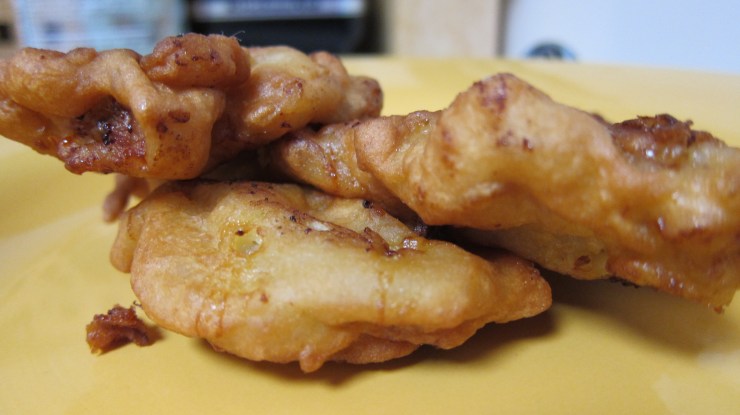
Fried Banana

Fried banana by HR

Fried banana by HR

Fried banana (in Bahasa Indonesia: pisang goreng), a classic Indonesian snack, comes in many versions. From the very gourmet at trendy restaurants, to the ones sold in bakeries, to the everyday version sold on the streets stacked up against food vendors cart’s glass window, the snack could easily be everyone’s favorite. It is sweet, simple, and straightforward. Pure comfort. With plenty of banana varieties (sweet ones, not so sweet ones, small ones, big ones, green, yellow, reddish-brown and names like pisang raja, pisang tanduk, etc) in this country, it only makes sense to turn them into delightful little bites.

One of my first trials in making fried banana was back in college days with a couple of friends. The three of us stood in my friend’s kitchen following my other friend’s mom’s recipe. He actually called his mom in Jakarta to get the recipe. We were serious about making this snack that night :).

Years have gone by since that day. The way I do fried banana might have evolved too. But the basic method I learned with my buddies more than a decade ago stuck with me.

Here’s the ingredient list for my version:

  • 5-6 bananas (I get the yellow ones with a little hint of green on the skin and on the crown part. They need to be on the  firm side so they won’t get mushy when fried.)
  • 1 cup of all-purpose flour
  • ½ cup of water
  • 3 tablespoon of fine sugar
  • 3 tablespoon of honey
  • 1 egg
  • ½ teaspoon of salt
  • Vegetable oil

Steps:

  • Heat up a large pan (over medium heat). Fill it with 1 or 1 ½ cup of vegetable oil (depending on how big the pan is.)
  • In a big bowl, mix flour, sugar, honey, egg, and salt. Add water to the mixture until it turns into nice and thick liquid batter.
  • Peel the bananas and cut them up into round pieces
  • Add bananas into the batter and make sure that they are all nicely coated

Banana batter HR

  • Spoon three to four pieces of bananas together (making them into clusters) into the hot oil. You could probably fry three or four clusters at the same time in the pan. Make sure that ž of the banana clusters are submerged in the oil. Fry each side for about 2 minutes or until it turns golden brown. Flip and fry the other side. Reduce the heat if the bananas brown too quickly.

Frying bananas HR

  • Remove banana clusters from hot oil using food strainer to drain excess oil
  • Let the bananas cool down for 5 minutes on a serving plate layered with paper towel
  • Watch them disappear quickly 🙂

Thanks for stopping by.

Have a great week ahead!

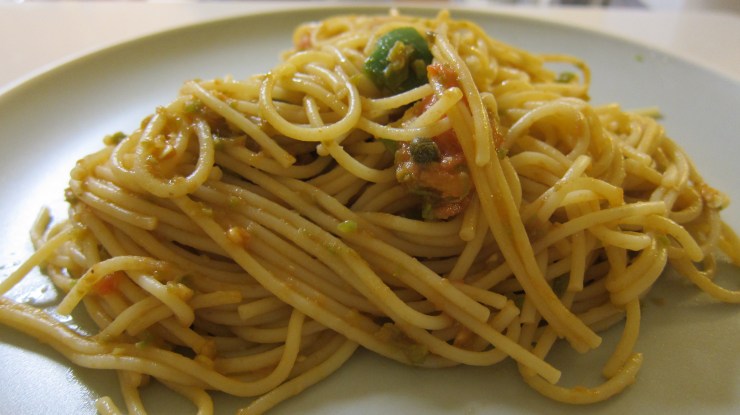
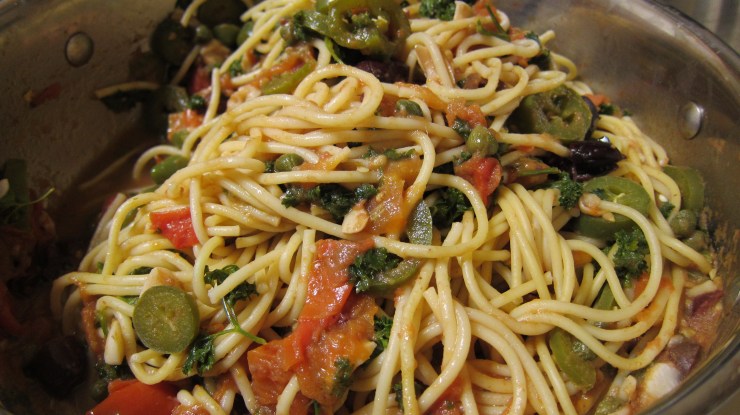
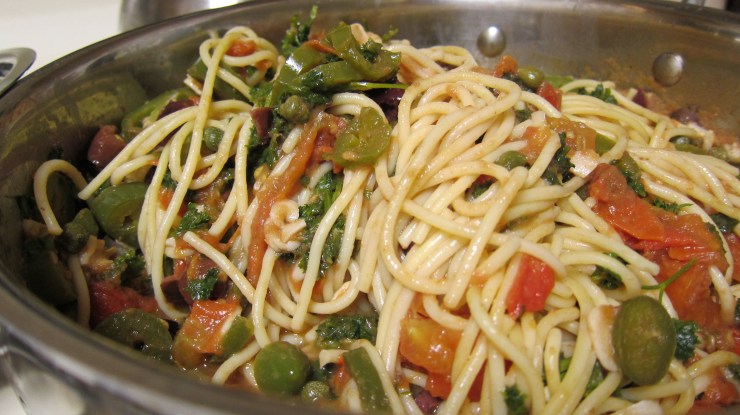
Spaghetti ala Puttanesca

Revised by author on 12/30/2013

Spaghetti ala Puttanesca
Spicy and garlicky, infused with anchovies! My kind of spaghetti…

Spaghetti ala Puttanesca

Spaghetti ala Puttanesca

Recently I stumbled upon a description of this dish in a book, called Belong to Me by Marisa de los Santos, that I checked out from the library on a whim. (Yes, though I have an Amazon Prime and a tablet, I still check out books from public library. I also still prefer books than e-books.) Anyway, one of the characters in this novel ( a book that has nothing to do with cooking by the way) described and raved about the dish in such a beautiful way that it made me hungry. Immediately! And that name, Spaghetti ala Puttanesca, the Whore’s Style Spaghetti? Wild! How could I resist the urge to try a dish with such a scandalous title?

In no time, I found tons of recipes for the dish online. I made mine using Nigella Lawson’s. This recipe had me at jalapeĂąo. Here’s my adapted version. I liked it even more with the following revisions!

  • I used 12 10 instead of eight marinated anchovies (usually come in a tin or a jar)
  • I used five fresh jalapeno peppers (chopped) instead of pickled and chili flakes
  • I chopped five fresh tomatoes (instead of mixing them with canned tomato sauce) two heirloom and mix them with a small can (8 oz) of tomato sauce (not dice tomatoes or tomato paste)
  • Two tablespoon of olive oil
  • Two tablespoon of capers (drained and rinsed)
  • Three tablespoon of (roughly) chopped black olives Forgot to buy black olives so I went without
  • Five garlic (chopped) Four
  • A handful of parsley (chopped)

(Serves 3-4 people)

Steps:

  • Boil the pasta. Add a little bit of salt and olive oil into the water. Follow the instruction on the packaging.
  • Mix anchovies, jalapeĂąo peppers, and garlic in a food processor then cook it with olive oil on a heated medium pot for two or three minutes.
  • Add chopped tomatoes, capers, and tomato sauce into the pot. Stir to mix everything together and let it cook for 10-15 minutes.
  • Heat up a large pan, add olive oil, garlic, chopped tomatoes, and anchovies. Mix them well. Add jalapeno peppers, black olives, and capers. Cover the pan with a lid and let it cook for 10–15 minutes
  • Drain the pasta, mix with the sauce, and add parsley
  • Serve and eat up!

Another easy and delicious recipe to keep.

Thanks for reading. Hope your week is going well!

Sources of inspiration for this blog entry:

Marisa de los Santos’ Belong to Me (pg. 44)

Nigella Lawson’s recipe: Slut’s Spaghetti

The Mystical and Historic East Java

(Touring the Motherland Series)

As part of the Majapahit Empire in the 13th – 16th century, Surabaya and its surrounding area in East Java province has much history to tell. About 35 miles south of Surabaya, nearby Trawas, Mount Penanggungan stands keeping hundreds of historical monuments left by the kingdom. East Javanese in Majapahit era embraced both Hindu-Buddha spirituality and considered the mountain to be sacred. Hence the places of worship built all over Penanggungan. So when my guy and I heard about an archaeological trail being developed on the mountain by University of Surabaya, we immediately signed up for a short day-hike.

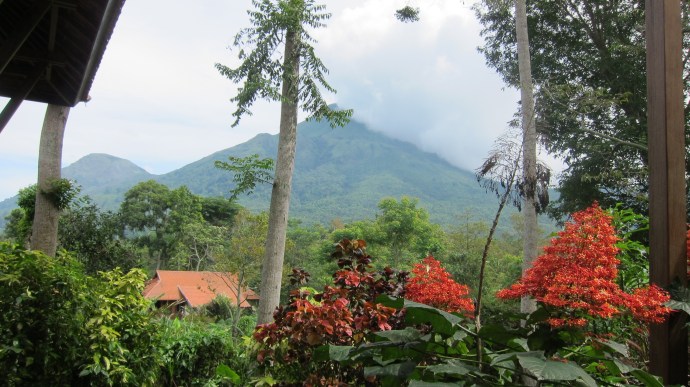
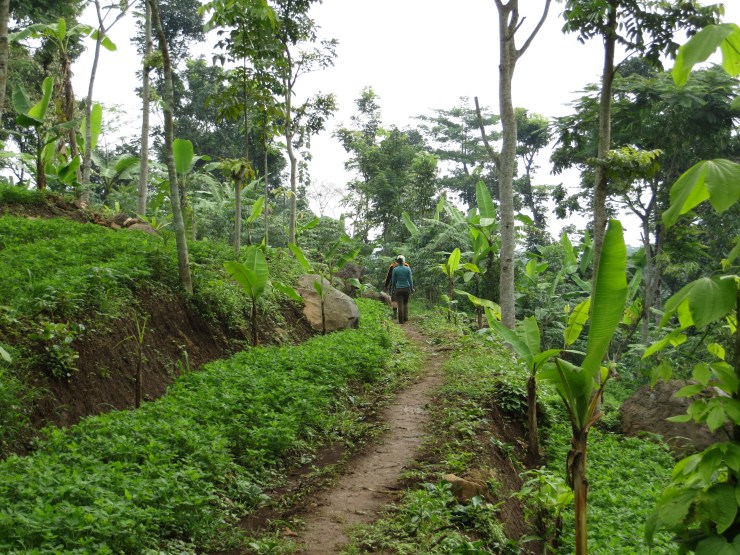
The distinct profile of Penanggungan, with its cone shape, rounded summit as the center, and the small hills that looked like they sat symmetrically circling the mountain’s shoulders, made a majestic backdrop. By mid morning, we joined a small group to hike through the woods up to the mountain. The rocky and grassy trail turned muddy and slippery after the rain. It made ascending and descending on the short distance route we chose to be quite challenging. I think all five of us must have slipped at least once (and many times for me!). 

Mount Penanggungan's summit
Mount Penanggungan’s summit

Mount Penanggungan

Going up the mountain

The two ancient ruins we saw, Selo Kelir and Telong Blandong, looked like gigantic terraces that made up one big temple for spiritual ceremonies. The consultant explained that most artifacts at the ancient sites all over the mountain have been stolen. Archaeological theft is such an unfortunate reality and a real challenge in history preservation effort.

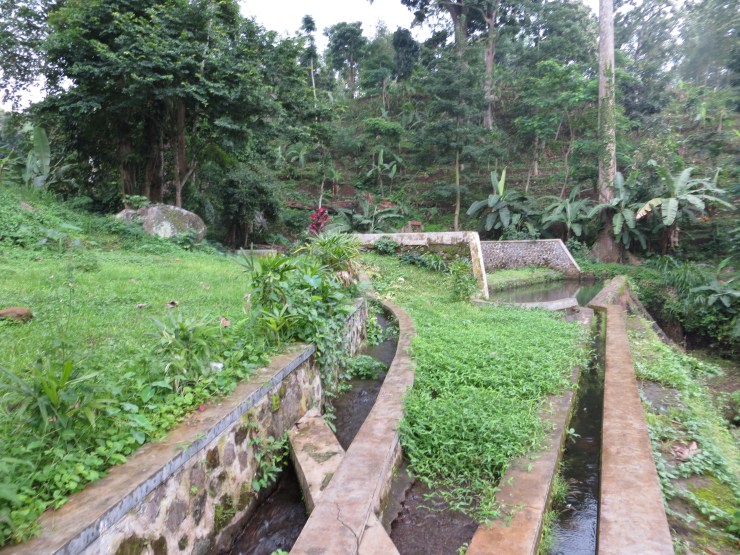
Overlooking a stretch of lush green valley, the view from the top of Telong Blandong was nothing short of spectacular. The fog set in as we started to descend slowly. We passed a spring on the way back. The smell of incense burning along the weir added a mystical feel to the experience.

I’ve always been fascinated by Penanggungan ever since I was little. Little did I know that behind its beauty lies mystical and rich cultural history of East Java. Penanggungan’s charm didn’t disappear with the fall of the Majapahit empire. It continues to allure people to admire its magnificence closely on its wild slopes or from afar. Either way is a treat for the soul.

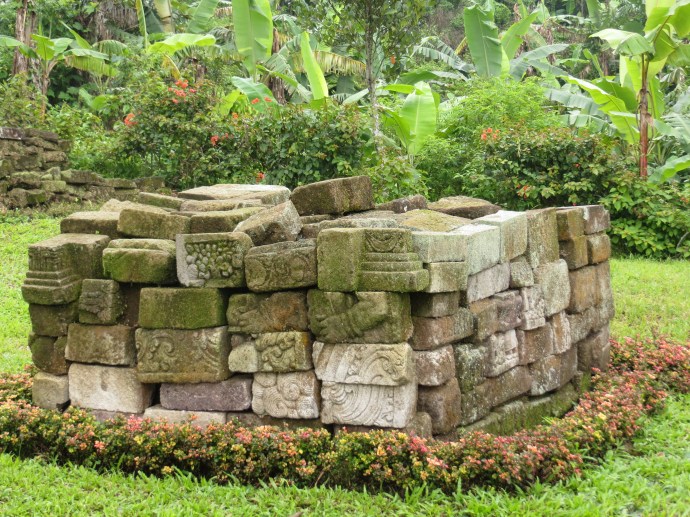
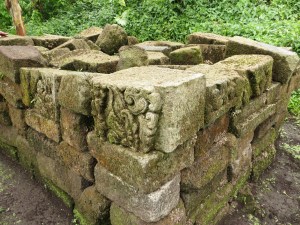
Carved stones that probably used to make up part of the temple.

Carved stonesPart of the monument Selo Kelir

Some part of the trail has been developed
Locals look for grass in the mountain to sell to cattle owners.
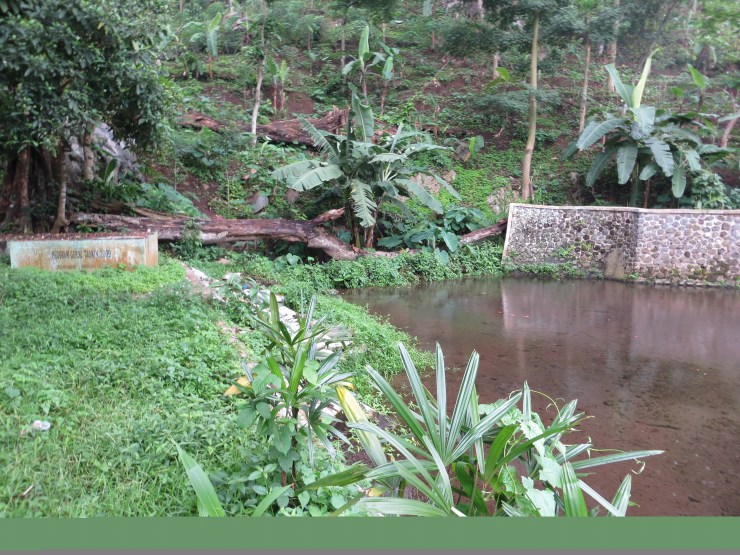
A spring
A spring
Water from the spring passing through a weir
Offerings and incense burning along the weir

Other historic places we visited while in Trawas:

Jolotundo Temple: a water spring reservoir dated back to 977 CE. It was said to be King Airlangga's place to meditate. It is also said  that the water from the spring behind the temple to be very clean and has high minerals. Bathing pools are available on the two sides. One side for women and another side for men.
Jolotundo Temple: a water spring reservoir dated back to 977 CE. It was said to be King Airlangga’s place to meditate. It is also said that the water from the spring behind the temple to be very clean and has high minerals. Bathing pools are available on the two sides. One side for women and another side for men.
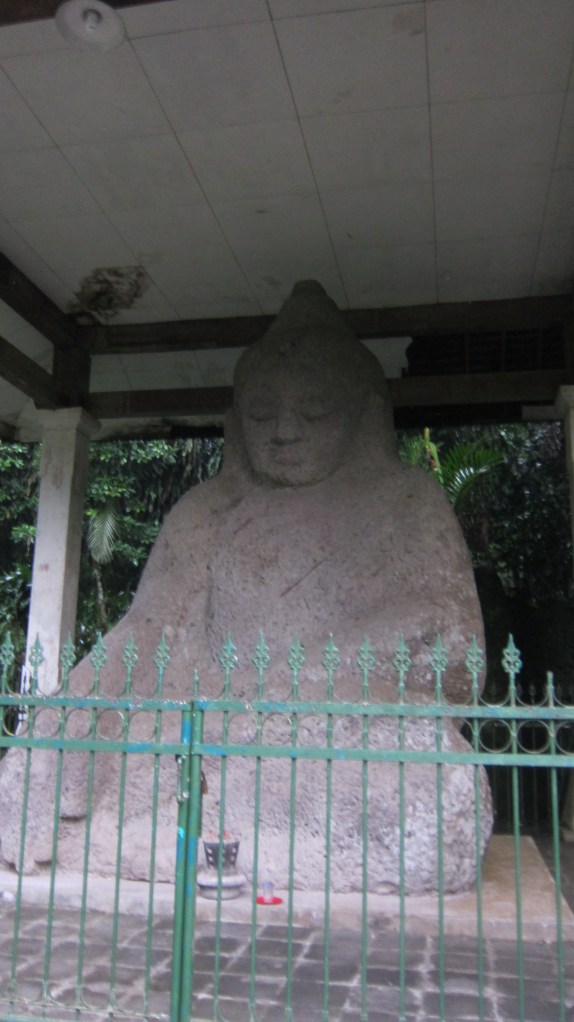
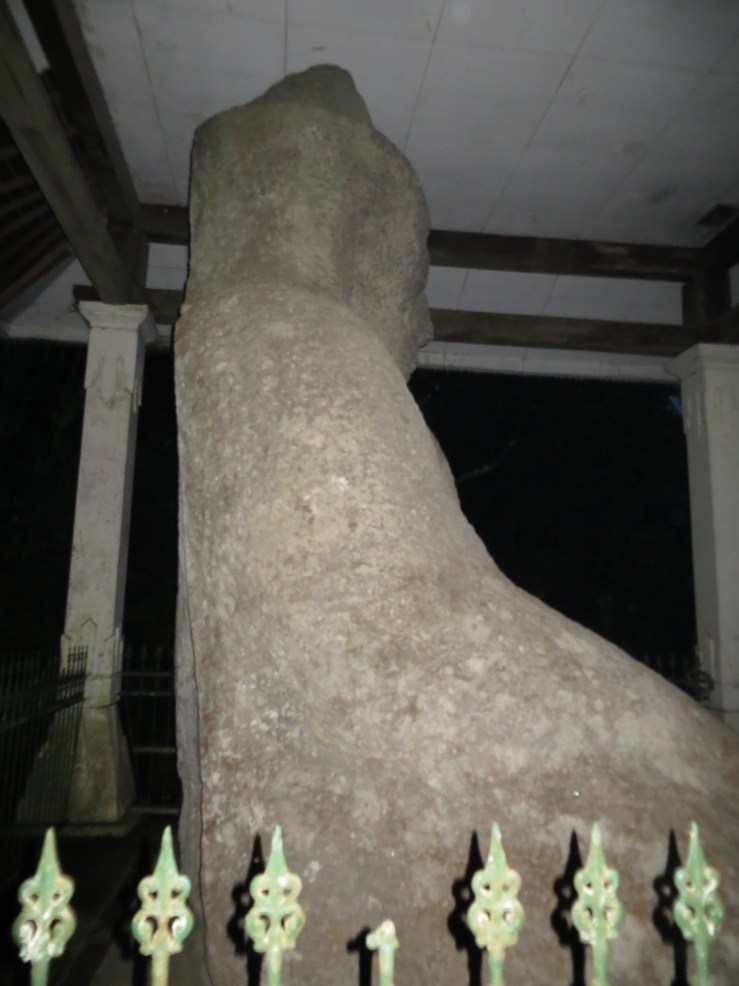
A giant Buddha statue carved in one stone. Dated back to the Majapahit era (13th-16th century).
Reco Lanang: A giant Buddha statue carved in one stone. Dated back to the Majapahit era (13th-16th century).

From the side

Thanks for reading! Hoped you enjoyed it.

More articles on the archeological trail and East Java’s history from various sources:

Exploring the Ancestor Site (Part 1)

Exploring the Ancestor Site (Part 2)

Memory of Majapahit Kingdom 

A special thanks to Pak Kus and Mas Ronald at UTC

Photos by The Traveling Chili Pepper and friends

Touring the Motherland Series: Surabaya

Like most big cities, Surabaya feels packed, busy, and sounds a bit loud. My visit last December changed my point of view about my hometown though. After experiencing the congested Jogjakarta on one of the busiest national holiday weekends—chock full of tourists, jam-packed, and overcrowded… you get the idea—my guy and I were incredibly thankful for and to be back in Surabaya. We let go a sigh of relief when the plane landed at Juanda. Surabaya had never felt so much bigger, roomier, better organized, cleaner, and greener. Isn’t travelling great? I gain a lot from it, including: perspective.

What else can I tell you about my hometown? Ah, yes, Surabaya is a city with good eats. This is the place to be for delicious East Javanese cuisine like sate klopo, sate Madura, soto ayam, and soto Madura. And of course, my must-haves: the thick, spicy, and fragrant petis-based (shrimp paste) dishes: rujak, lontong balap, tahu campur, kupang lontong, sate kerang, and oh so many other. Adjectives I’d use to describe East Javanese cuisine would be the same words I’d use to depict its people: bold and gutsy! The flavors “kick” the taste bud, as a friend puts it.

Founded in 1293, Surabaya, is an old and historic city with a youthful look and modern feel. In a certain section, the city displays its colonial-style houses left by the Dutch. The Arab quarter and Chinatown remain vibrant, reminding everyone of the attractive qualities of this port and trade city to foreign traders since way back when. Other parts of Surabaya are decorated with luxurious shopping malls with brands such as Jimmy Choo as one of its tenants. Competing shopping malls attract Surabayans the same way Chicago’s Lakefront Trail/park draws enthusiastic joggers, bicyclists, and sunbathers in summer months. Local coffee shops multiply rapidly all over you’d think that the whole city must be highly addicted to coffee. City pulse is strong and growth is apparent. Surabaya might be 720 years old but it looks like she’s far from slowing down. 


Next blog entry: the mystical and cultural charm of East Java

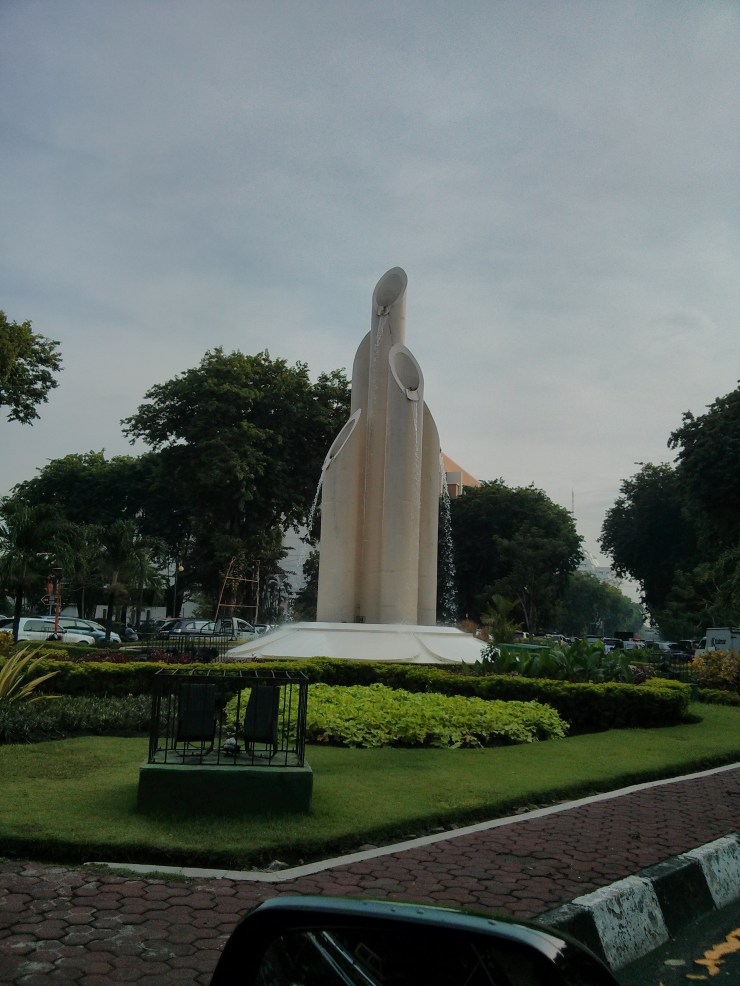
Bambu Runcing
Bambu Runcing Monument: was built in memory of the people of Surabaya who fought against the Dutch and British imperialism.
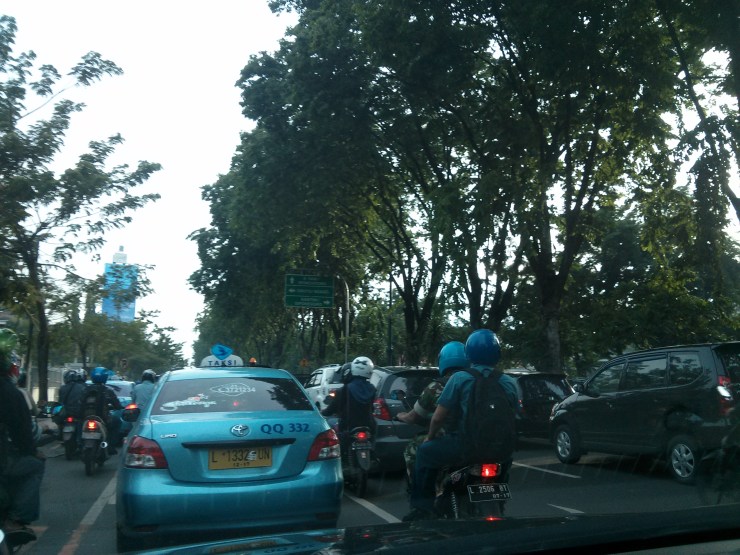
Always crowded
The consistent traffic jam
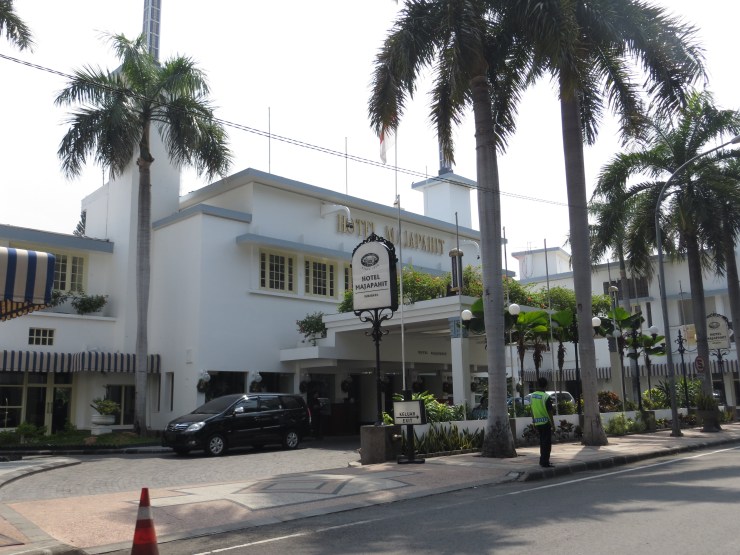
Hotel Majapahit
Hotel Majapahit (since 1911)

Related readings from various sources: 

Eating Out in Indonesia

Travel to Surabaya

Official Site of the City Government

Sparkling Surabaya

Memory of Majapahit

Surabaya’s Chinatown

Ampel: The Holy Heart of Surabaya

Photos properties of The Traveling Chili Pepper